

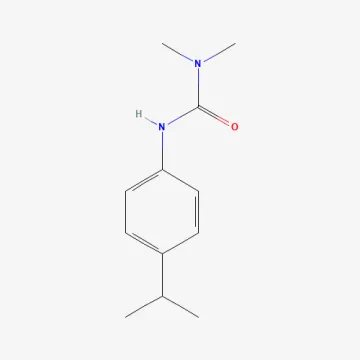
Description
Mode of action
Isoproturon belongs to the phenylurea chemical class. It acts as a systemic herbicide, capable of being absorbed by both the root system and the foliage of target plants, providing a comprehensive protective effect.
The primary mechanism of action involves the inhibition of photosynthesis. The substance interferes with electron transport in photosystem II, effectively shutting down the energy production cycle within the plant cells.
This disruption leads to a cessation of growth, followed by chlorosis, necrosis, and the eventual death of the weeds. The process is gradual, ensuring long-lasting suppression of unwanted vegetation.
Due to its soil activity, isoproturon remains present in the upper soil profile, preventing the germination and development of subsequent flushes of weeds.
Its effectiveness is highly dependent on environmental conditions, particularly soil moisture levels, which facilitate the uptake of the active ingredient by the plant's roots.
What it targets
The compound is widely used for the control of a broad range of annual grass weeds and certain broad-leaved species in cereal production. It is a vital tool for farmers aiming to minimize yield loss due to weed competition.
Key weed species controlled by isoproturon include:
- Black-grass (Alopecurus myosuroides)
- Common windgrass (Apera spica-venti)
- Annual meadow-grass (Poa annua)
- Various species of chickweed and chamomile
Isoproturon is particularly valued for its selectivity, allowing it to be used safely in crops like winter and spring wheat and barley to suppress grass competition.
The best control is achieved when the herbicide is applied early in the weed's development, ideally when they have reached the 1-to-3 leaf stage.
By effectively removing weed competition early in the season, farmers can ensure that cereal crops have the resources necessary for optimal development.
Rates and timing
Application rates are determined by factors such as soil organic matter, the spectrum of weeds present, and the specific stage of crop growth, typically ranging from 1.0 to 2.5 kg active ingredient per hectare.
The timing of application is critical; it is best performed during the tillering stage of cereals to ensure maximum efficacy while minimizing the risk of crop stress.
When mixing isoproturon with other agrochemicals, it is essential to ensure compatibility to maintain the stability of the mixture and prevent potential negative reactions on the crop.
The volume of the spray solution should be calibrated to provide uniform coverage of both the weeds and the soil surface, as both routes of absorption are important.
Environmental conditions at the time of application should be monitored, as extreme temperatures can affect the translocation and metabolism of the herbicide within the plants.
Restrictions
Certain soil types, particularly those with very high organic matter content, may reduce the efficacy of the herbicide due to adsorption of the active substance to soil particles.
Applications should be avoided if the crop is undergoing stress caused by frost, drought, pests, or diseases, as this can increase the risk of temporary phytotoxicity.
Strict safety protocols must be followed during handling, including the use of protective clothing and equipment to prevent skin contact and inhalation.
Precautions should be taken to prevent spray drift onto non-target areas, especially if sensitive crops are located nearby, to avoid unintentional damage.
Storage must be compliant with local regulations, keeping the product in its original packaging within a secure, dry, and well-ventilated area.
Regulatory
Status in the European Union
Not approved in the EU
- CAS number
- 34123-59-6
- Category (EU)
- HB - Herbicide
- Approved from
- 01.01.2003
- Approval until
- 30.06.2016
- ADI
- 0.015 mg/kg bw/day
- ARfD
- Not appl.
- AOEL
- 0.015 mg/kg bw/day
Hazard classification (CLP)
Aquatic Acute 1 - H400Aquatic Chronic 1 - H410Carc. 2 - H351STOT RE 2 - H373
EU legislation
EU status is for reference only and does not replace national registration in your country.
Content graph
Connections · Isoproturon
Most often together:
Marketplace
Products · 3

