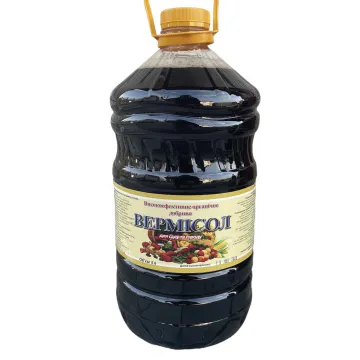
LIGNOGLUMATE
Private enterprise "Rodonit", Ukraine
Plant Growth Regulators
0
4
·
2.3K
6 offers
6.38 €per 1 l
Buy
Fulvic acids are a group of natural organic compounds derived from humic substances, characterized by a low molecular weight and high solubility across the entire pH range.
Their primary biological function is the chelation of metal ions, which improves the availability of micronutrients and macronutrients to the plant root system.
These substances significantly improve cell membrane permeability, facilitating a more rapid and efficient transport of nutrients throughout the plant tissues.
Fulvic acids serve as powerful anti-stress agents, enabling plants to manage water retention effectively and resist environmental stressors like drought and thermal stress.
They act as catalysts for metabolic processes, promoting the synthesis of essential plant enzymes and hormones that drive vegetative growth and reproductive development.
Fulvic acids are versatile inputs used across a wide range of agricultural crops to optimize yield potential and quality.
They are widely used in cereals and grains to support early root growth and increase resilience to climatic fluctuations during the growing season.
In fruit and vegetable production, fulvic acids are essential for improving fruit size, uniformity, and organoleptic properties.
They are particularly effective for oilseed crops such as canola and sunflowers, helping to maximize nutrient uptake from soil resources.
Greenhouse-grown crops benefit significantly from their application, as they help regulate soil balance in intensive, high-frequency irrigation systems.
The timing of application is crucial, with the most significant impact observed during seed germination and the peak phases of vegetative growth.
For foliar applications, typical dosage rates range from 100 to 500 ml per hectare, depending on the concentration of the product used.
Seed treatment is a common practice to boost germination energy, using specialized formulations for uniform coating of the seed surface.
Fertigation through drip irrigation systems allows for consistent delivery, with recommended concentrations typically ranging between 0.05% and 0.2%.
Frequency of use is generally recommended as 3 to 4 times per season to ensure continuous support for plant metabolic activities.
Compatibility with other pesticides should always be verified in a jar test, as fulvic acids can increase the penetration and uptake of certain agrochemicals.
Avoid mixing with products of extreme pH values, which could lead to precipitation of the active ingredients and loss of efficacy.
Application should be avoided during peak solar radiation to minimize the risk of phytotoxicity or rapid degradation of organic components.
Storage must be maintained in cool, dry conditions, protected from direct sunlight to preserve the integrity and biological activity of the acids.
Precision in dosage is essential; excessive application levels can interfere with natural root-to-shoot signaling or soil mineral balance.