

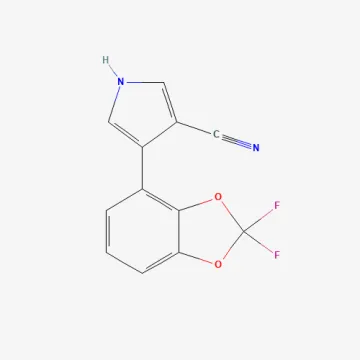
Description
Mode of action
Fludioxonil belongs to the phenylpyrrole chemical class and acts as a contact fungicide with a long-lasting protective effect. It was originally developed as a synthetic analogue of natural antifungal compounds produced by certain soil bacteria.
The mode of action involves inhibiting glucose transport within fungal cells, which disrupts osmotic balance and halts mycelial growth. It also interferes with phosphorylation processes, which are critical for the energy metabolism of the pathogen.
Due to its unique structure, fludioxonil suppresses protein kinase activity responsible for fungal cell division. This mechanism leads to the rapid death of spores and effectively prevents disease development at early stages.
The substance possesses significant residual activity, remaining on the seed coat and in the rhizosphere. It has minimal systemic mobility, creating a robust protective zone around the germinating sprout during critical early growth phases.
A key advantage is its high stability in the soil and resistance to being washed away by rain. This ensures sustained fungicidal efficacy even under challenging weather conditions immediately after planting.
What it targets
Fludioxonil is primarily utilized for seed treatment in cereals, maize, sunflower, potatoes, and various vegetable crops. It demonstrates high efficacy against a broad spectrum of soil-borne and seed-borne pathogens.
The substance is particularly active against fungi in the classes Ascomycetes, Basidiomycetes, and Fungi Imperfecti. Specifically, it effectively suppresses causative agents of fusarium root rots, helminthosporiosis, alternaria, and seed molding.
The compound provides excellent results in controlling diseases that occur at low soil temperatures, where other active ingredients may show reduced efficacy. This makes it an essential component for early sowing periods.
- Fusarium spp.
- Helminthosporium spp.
- Rhizoctonia solani
- Botrytis cinerea (Grey mold)
- Snow mold
Due to the absence of cross-resistance with other fungicide groups, fludioxonil serves as a critical tool in integrated pest management programs to combat resistant fungal strains.
Rates and timing
The application rate depends on the crop and target pathogen, typically ranging from 2.5 to 10 grams per 100 kg of seeds. Precise dosage must comply with the label instructions provided by the specific manufacturer.
Seed treatment should be performed in advance or immediately before planting using professional equipment. It is essential to ensure uniform coverage of the seed surface to form a stable protective film.
When used in tank mixtures, fludioxonil is highly compatible with insecticidal seed treatments and other systemic fungicides like metalaxyl-M or difenoconazole, which helps broaden the spectrum of protection.
Pre-harvest intervals are generally not applicable for seed treatment, as the substance does not accumulate in the harvested portion of the crop in concentrations posing a risk to human health.
Treated seed should be stored in a cool, dry place away from direct sunlight to maintain the stability of the active ingredients on the seed coat.
Restrictions
Fludioxonil is considered low-toxicity to humans and mammals, yet standard safety precautions must be followed when handling agrochemicals. Personal protective equipment (PPE) for respiratory and skin protection is mandatory.
The substance is highly toxic to fish and aquatic organisms. During treatment, one must prevent spillages or wash-water from entering water bodies, storm drains, or drinking water sources.
It is not recommended to use this product on seeds with high moisture content or those with mechanical damage to the coat, as this may negatively affect germination energy and overall seed vigor.
In case of contact with skin or mucous membranes, wash the affected area immediately with plenty of water. If ingested, seek medical attention immediately and bring the product label along.
Disposal of packaging and product residues must be carried out in accordance with local environmental regulations. Empty containers must not be reused for domestic purposes.
Regulatory
Status in the European Union
Approved in the EU
- CAS number
- 131341-86-1
- Approved from
- 01.11.2008
- Approval until
- 30.09.2026
- ADI
- 0.37 mg/kg bw/day
- ARfD
- Not appl.
- AOEL
- 0.59 mg/kg bw/day
EU legislation
EU status is for reference only and does not replace national registration in your country.
Content graph
Connections · Fludioxonil
Most often together:
Marketplace
Products · 70


As Selektiv
ТОВ «Фабрика агрохімікатів», Черкаси, Україна
Insecticides
0
0
·
63
15 offers
14.09 €per 1 l
Buy


AS- SELECTIVE
ТОВ «Фабрика агрохімікатів», Черкаси, Україна
Insecticides
0
0
·
48
2 offers
28.95 €per pack
Buy



KARİOLİS, TN
ТОВ «Фабрика агрохімікатів», Черкаси, Україна
Fungicides
0
0
·
41
6 offers
16.42 €per 1 l
Buy


Maxim 025FS
Сингента Агро С.А.С., Сант Пьер ла Гарен, Франція
Fungicides
0
0
·
40
17 offers
25.96 €per 1 l
Buy


As Selektiv
ТОВ «Фабрика агрохімікатів», Черкаси, Україна
Insecticides
0
0
·
39
1 offer
44.33 €per 1 l
Buy


Magnat Total Ks
Хімічні заводи «Органіка-Сажина»С.А., Нова Сажина, Польща
Fungicides
0
0
·
39
1 offer
72.76 €per 1 l
Buy

Sidgard
Жеджианг Хебен Пестисайд енд Кемікалс Ко., Лтд., Китай
Fungicides
0
0
·
38
9 offers
2.46 €per 1 l
Buy

RESTLER TRIO
ТОВ «Фабрика агрохімікатів», Черкаси, Україна
Fungicides
0
0
·
33
12 offers
9.66 €per 1 l
Buy


