

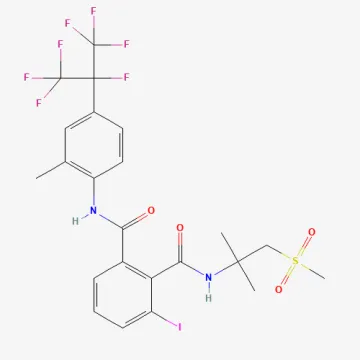
Description
Mode of action
Flubendiamide is an innovative active ingredient belonging to the phthalic acid diamide chemical class. It is a next-generation systemic insecticide that differs significantly from organophosphates or pyrethroids in its mode of action against pests.
The primary mechanism of action involves the activation of ryanodine receptors in the insect muscle cells. This triggers the uncontrolled release of calcium ions from intracellular stores, leading to a rapid disruption of muscle contraction function and subsequent paralysis.
The pest stops feeding almost immediately after contact with the product or ingestion, ensuring prompt protection of the treated crop from damage. Symptoms manifest quickly: loss of mobility, cessation of feeding, and death within 1 to 3 days.
The substance possesses marked translaminar activity, penetrating leaf tissues, which allows it to control insects residing on the underside of the leaf blade. It also demonstrates high resistance to wash-off by precipitation shortly after application.
Flubendiamide-based products exhibit high selectivity, affecting mainly specific pest groups, making them a crucial tool in integrated pest management (IPM) systems.
What it targets
Flubendiamide is specialized for the control of a wide spectrum of pests belonging to the order Lepidoptera, including all larval stages from the first to the final instar.
The product effectively eradicates cutworms, moths, leafrollers, fruit worms, corn borers, and other difficult-to-control pests. Due to its high biological activity, it successfully manages even resistant insect populations.
It is used on various agricultural crops: vegetable crops (tomatoes, cabbage), fruit and berry crops (apples, grapes), field crops (corn, soy, cotton), and ornamental plants, making it a versatile solution for intensive farming.
The substance shows excellent efficacy in combating pests that have developed resistance to traditional insecticides such as pyrethroids or chitin synthesis inhibitors.
The use of flubendiamide prevents deep damage to fruits, stems, and foliage, which is critical for maintaining the commercial quality of the harvest.
Rates and timing
Application rates vary depending on the crop, infestation level, and formulation, but generally range from 50 to 150 grams of active ingredient per hectare.
Optimal application timing coincides with the hatching period of pest larvae. It is recommended to perform treatments preventively upon reaching the economic threshold or at the first signs of young larvae appearing.
The frequency of applications per season is strictly limited to prevent the development of insect resistance. Usually, no more than two consecutive applications of the same product are recommended before rotating to insecticides of other chemical classes.
The quality of application depends directly on the uniform coverage of the plant surface with the spray solution, so the use of high-quality spraying equipment is a mandatory agronomic requirement.
The pre-harvest interval (PHI) varies by crop, so it is essential to follow the specific instructions on the label of the plant protection product.
Restrictions
Despite its high efficacy, there are strict limitations on the use of flubendiamide to ensure environmental safety. Treatments are prohibited in water protection zones and near apiaries during periods of active bee foraging.
When working with the product, it is necessary to strictly follow personal protective measures: use protective clothing, respirators, safety goggles, and gloves to avoid contact with skin, eyes, or the respiratory system.
A crucial requirement is adherence to anti-resistance strategies. Excessive use of diamide-based products can trigger the emergence of resistant individuals; therefore, rotation with other classes of insecticides is mandatory.
Product storage must be carried out in its original packaging, in dry, specially equipped warehouses, away from food, feed, and sources of open flame or moisture.
Disposal of remaining spray solution and empty containers must be conducted in accordance with current environmental legislation, preventing chemical contamination of wastewater or open water bodies.
Regulatory
Status in the European Union
Not approved in the EU
- CAS number
- 272451-65-7
- Category (EU)
- IN - Insecticide
- Approved from
- 01.09.2014
- Approval until
- 31.08.2024
- ADI
- 0.017 mg/kg bw/day
- ARfD
- 0.1 mg/kg bw
- AOEL
- 0.006 mg/kg bw/day
EU legislation
EU status is for reference only and does not replace national registration in your country.
Content graph
Connections · Flubendiamide
Most often together:
Marketplace
Products · 7


