

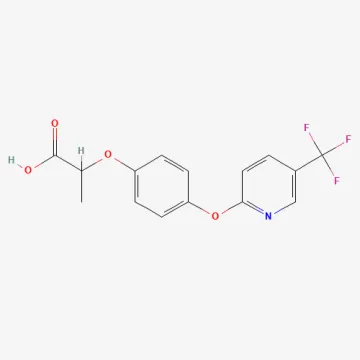
Description
Mode of action
Fluazifop-P-butyl belongs to the aryloxyphenoxypropionate chemical class. It is a selective, systemic post-emergence herbicide that is rapidly absorbed through the leaves of target plants.
Once absorbed, the active ingredient is translocated through both the phloem and xylem to the actively growing meristematic tissues in the nodes and roots of grass weeds.
The primary mechanism of action involves the inhibition of the acetyl-CoA carboxylase (ACCase) enzyme. This enzyme is essential for fatty acid biosynthesis, which is required for plant cell membrane formation.
Growth stops shortly after the herbicide enters the plant tissues. Visible symptoms such as chlorosis and necrosis typically appear within a week, leading to the gradual death of the entire plant.
The herbicide is highly selective, which means it effectively kills grass weeds while leaving broad-leaved crops unharmed, provided the label instructions are followed.
What it targets
Fluazifop-P-butyl is widely used for controlling a broad spectrum of annual and perennial grass weeds that pose a significant threat to agricultural crop yields.
Target weeds include species like couch grass (Elymus repens), wild oats (Avena fatua), barnyard grass (Echinochloa crus-galli), foxtails (Setaria spp.), and volunteer cereals.
It is particularly effective against tough perennial grasses because it is translocated down to the rhizomes and stolons, preventing the regrowth of the weed population.
It is commonly applied in crops such as soybeans, sugar beets, sunflowers, flax, potatoes, and various vegetables like onions, carrots, and cabbage.
As it does not affect broad-leaved weeds, it is often utilized in weed control programs where it is tank-mixed with other herbicides to ensure comprehensive field coverage.
Rates and timing
Application rates are determined by the specific weed species, their growth stage, and the overall density of the infestation. Higher rates are generally needed for perennial grasses.
For annual grasses, the optimal timing for treatment is during the 2 to 4-leaf stage. Early application ensures higher sensitivity and better overall efficacy of the herbicide.
When controlling perennial grasses like couch grass, it is crucial to treat them when they reach a height of approximately 10–15 cm to allow sufficient surface area for absorption.
Adding surfactants to the tank mix is often recommended, as they improve droplet retention on the narrow, upright leaves typical of grass species, thereby increasing penetration.
Always adhere to the specific product label regarding harvest intervals and the maximum number of applications allowed per season to ensure regulatory and safety compliance.
Restrictions
Weather conditions significantly impact efficacy. The ideal temperature for application is between +10 and +25 degrees Celsius; extreme temperatures may reduce the speed of weed response.
Avoid spraying if rain is expected within 1–2 hours, as the herbicide needs time to be absorbed by the leaf surface to be effective against the targeted weeds.
Do not perform mechanical cultivation or weeding operations within 5-7 days before or after applying the herbicide, as this can disrupt the systemic transport of the active ingredient.
Prevent spray drift to adjacent fields planted with cereals or corn, as the herbicide will cause severe damage or complete crop loss in these grass-based crops.
Always handle with caution, wear appropriate personal protective equipment (PPE), and ensure that the herbicide does not contaminate water sources or sensitive surrounding areas.
Regulatory
Status in the European Union
Not approved in the EU
- CAS number
- 69335-91-7
- Category (EU)
- HB - Herbicide
EU legislation
EU status is for reference only and does not replace national registration in your country.
Content graph
Connections · Fluazifop-P-butyl
Most often together:
Marketplace
Products · 24


Flora, KE Fluazifop-p-butyl
Shandong Binnong Technology Co., Ltd., Китай, Superus Co. LTD, Китай
Herbicides
0
0
·
55
2 offers
10.85 €per 1 l
Buy


Fusilade Forte 150 EC c.e.
Сингента Лімітед, Хаддерсфільд,Великоб-ританія
Herbicides
0
0
·
37
3 offers
27.56 €per 1 l
Buy


