

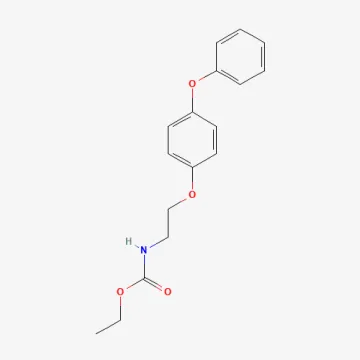
Description
Mode of action
Fenoxycarb belongs to the carbamate chemical class, but its mode of action is fundamentally different from traditional contact-stomach poisons. This substance serves as a synthetic analog of the insect juvenile hormone.
The mechanism of action relies on disrupting the pest's hormonal balance. Once it enters the insect's body, fenoxycarb mimics the natural hormone responsible for maintaining the larval development stage.
As a result, larvae lose the ability to undergo normal metamorphosis. They either die during an attempted molt or remain in the larval stage, failing to reach sexual maturity.
The substance also exerts a sterilizing effect on adult insects. Females exposed to the treatment lay non-viable eggs, which significantly reduces the fertility of the entire population in the field.
Due to its high selectivity, fenoxycarb is safe for many entomophages and predatory mites, making it a valuable tool in integrated pest management (IPM) programs.
What it targets
Fenoxycarb is most effective against Lepidoptera, Coleoptera, and Homoptera insects, including a wide range of scale insects and mealybugs.
It is successfully used to control populations of leafrollers, codling moths, and various moth species in orchards and vineyards. The substance actively inhibits pest development at early stages.
Fenoxycarb also demonstrates high efficacy against greenhouse whiteflies, preventing their reproduction in indoor environments on vegetable and ornamental crops.
It is frequently used for managing populations of fungus gnats and other pests in greenhouses, where selective action is required without harming beneficial pollinating insects.
In specific cases, the product is applied in control programs for ants and other domestic insects, disrupting the colony's reproductive cycle by affecting larvae and the queen's fertility.
Rates and timing
Application rates vary depending on the specific crop, pest species, and treatment method, such as foliar spraying or fumigation in enclosed spaces.
An essential requirement is ensuring uniform coverage of the leaf surface with the working solution, as the mode of action depends on direct contact with the larvae or eggs.
The timing of applications is critical: maximum effectiveness is achieved when used at the beginning of the egg-laying period or when first-to-second instar larvae appear.
The frequency of seasonal applications is strictly regulated by the manufacturer to prevent the emergence of resistant populations, although the risk of developing resistance remains low.
It is recommended to combine fenoxycarb application with pest monitoring using pheromone traps to determine the optimal timing for treatment.
Restrictions
When using fenoxycarb, protective intervals for beneficial insects must be observed, despite its relative safety, to avoid direct contact with the active substance.
The product exhibits high stability in field conditions, providing a long-lasting protective effect, but this also imposes restrictions on pre-harvest intervals.
Storing the working solution for extended periods is not recommended, as this can lead to a decrease in the biological activity of the active ingredient.
Particular attention should be paid to the operator's personal protective equipment, despite the absence of the classic neurotoxicity associated with other insecticide groups.
The application of fenoxycarb near water bodies is discouraged, as it may have negative effects on aquatic arthropods living in these environments.
Regulatory
Status in the European Union
Not approved in the EU
- CAS number
- 72490-01-8
- Category (EU)
- IN - Insecticide
- Approved from
- 01.06.2011
- Approval until
- 31.05.2021
- ADI
- 0.053 mg/kg bw/day
- ARfD
- 2.0 mg/kg bw
- AOEL
- 0.1 mg/kg bw/day
Hazard classification (CLP)
Aquatic Acute 1 - H400Aquatic Chronic 1 - H410Carc. 2 - H351
EU legislation
EU status is for reference only and does not replace national registration in your country.
Content graph
Connections · Fenoxycarb
Most often together:
Marketplace
Products · 7


