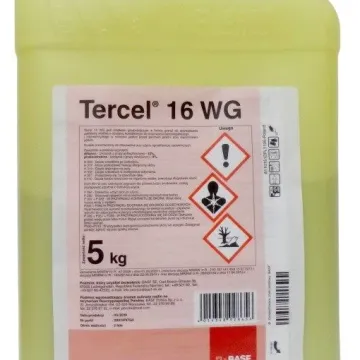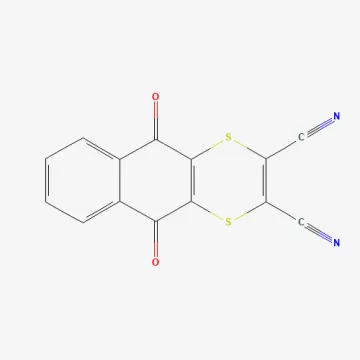
Description
Mode of action
Dithianon belongs to the quinone chemical class. It is a multi-site contact fungicide that does not penetrate plant tissues, creating a protective barrier on the surface of leaves and fruits instead.
The mode of action involves interfering with the respiration of fungal spores. The active ingredient inhibits enzymes containing sulfhydryl groups, which effectively kills spores before they can germinate.
A key feature of the substance is its high resistance to wash-off by rain. Due to its unique formulation, the product particles fix firmly to the plant cuticle, providing durable protection even during wet spring weather.
Dithianon has no systemic properties, meaning it does not translocate to new growth. To achieve maximum efficacy, thorough coverage of the target plant surface with the spray solution is required.
The compound performs effectively across a wide range of temperatures, making it suitable for early spring applications as well as summer use when the risk of fungal pressure remains high.
What it targets
The primary use of dithianon is for the control of a wide spectrum of fungal diseases in commercial orchards and vegetable crop production.
The main target for the application is the control of scab (Venturia spp.) on apples and pears. It shows high efficacy against all developmental stages of the pathogen, including primary infections post-winter.
Beyond scab, dithianon suppresses the development of leaf spots, including Septoria and Alternaria species on various pome and stone fruit crops.
The product is successfully used to suppress anthracnose, which can cause significant losses in stone fruit and certain berry crops.
Its effectiveness against peach leaf curl has also been documented, making it an indispensable component in stone fruit orchard protection programs.
Rates and timing
Application rates vary depending on the specific crop, growth stage, and the level of infection pressure observed in the field.
Typically, in intensive orchards, concentrations range from 0.5 to 1.0 kg of the product per hectare. It is essential to follow the manufacturer's recommendations for specific formulations.
Timing of applications is dictated by disease forecast models. The first spraying is done preventively before fungal spores can germinate on young foliage.
The interval between subsequent applications is usually 7–10 days; in cases of heavy rainfall or rapid shoot growth, shortening the interval to 5–7 days is recommended.
Ensuring uniform spray coverage is vital to avoid leaving untreated areas, as the lack of systemic movement makes even small unprotected spots vulnerable to infection.
Restrictions
Dithianon is moderately toxic to mammals; therefore, strict adherence to hygiene standards and the use of personal protective equipment (PPE) are mandatory during application.
Applications during the bee flowering period should be avoided, as the substance can have toxic effects upon direct contact, even though it is not classified as highly toxic to pollinators.
Mixing dithianon with highly alkaline substances or certain oils is generally prohibited, as it may lead to phytotoxicity or reduced chemical efficacy.
To prevent the development of pathogen resistance, it is recommended to rotate dithianon with systemic fungicides from different chemical classes.
Operators must strictly adhere to the pre-harvest intervals (PHI) specified on the product label to ensure that no pesticide residues exceed regulatory limits in the harvested produce.
Content graph
Connections · Dithianon
Most often together:
Marketplace
Products · 13



Acrobat Top
БАСФ Агро БВ, Швейцарія, на заводі , Франція,Італія (Сієна)
Fungicides
0
0
·
65
9 offers
4.24 €per 1 l
Buy


DELAVID
ТОВ «Фабрика агрохімікатів», Черкаси, Україна
Fungicides
0
0
·
37
10 offers
5.83 €per 1 l
Buy