

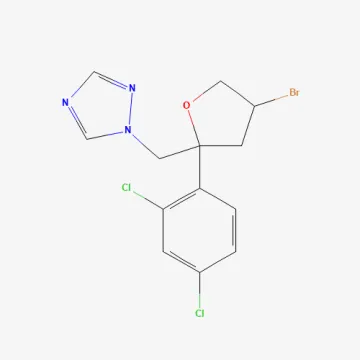
Description
Mode of action
Bromuconazole is a systemic fungicide belonging to the triazole chemical group. It is characterized by its ability to be rapidly absorbed by plant tissues, providing translocation through the xylem and protecting both existing and new growth.
The primary mode of action is the inhibition of ergosterol biosynthesis. By blocking the C-14 demethylase enzyme, bromuconazole disrupts the integrity of fungal cell membranes, effectively stopping the development and reproduction of the pathogen.
The substance exhibits strong preventive and curative properties. It halts the progression of fungal infections even after they have begun to colonize the leaf surface, making it a reliable tool for field management.
Due to its high systemic activity, bromuconazole remains effective against environmental challenges, demonstrating good rainfastness once the application has dried on the plant surface.
It is frequently formulated in combination with other active ingredients to broaden the spectrum of controlled diseases and to mitigate the risk of pathogen resistance in intensive farming systems.
What it targets
Bromuconazole is primarily used to control a wide range of fungal diseases in cereal crops. It is highly effective against various rust fungi that cause significant damage to wheat and barley yields.
The fungicide provides excellent control over septoria leaf blotch, which often causes significant leaf area loss and reduced grain quality if left unchecked during the growing season.
It is also employed to manage powdery mildew infections, which thrive in moderate temperatures and can spread rapidly across cereal fields, affecting plant photosynthesis.
Furthermore, bromuconazole is effective against helminthosporium leaf spots and various fusarium species, helping to protect the integrity of the stem and head of the plant.
- Rust diseases (Puccinia spp.)
- Septoria leaf and glume blotch (Septoria spp.)
- Powdery mildew (Erysiphe graminis)
- Helminthosporium leaf spot
- Fusarium head blight
Rates and timing
Application rates for bromuconazole are determined based on the crop growth stage and the severity of the disease pressure. Timely application is crucial to ensure maximum protection of the crop canopy.
In cereal crops, the most effective window for application is during the stem elongation or flag leaf emergence stages, when the plant is most vulnerable to fungal attack and the yield potential is being established.
The spray solution must be prepared according to the manufacturer's label to ensure proper concentration and uniformity. Using high-quality nozzles helps achieve the necessary coverage of the foliage.
If environmental conditions favor prolonged disease development, repeat applications may be necessary, provided that interval guidelines are followed to avoid potential chemical residues.
Adjuvants are often added to the tank mix to enhance the wetting properties and leaf penetration of the bromuconazole, improving the overall efficiency of the treatment under varying climatic conditions.
Restrictions
Operators must adhere to strict personal safety protocols, including wearing protective clothing, respirators, and gloves, to prevent any dermal or respiratory exposure to the fungicide.
Spray drift must be strictly avoided by monitoring wind speed and direction. Application should not occur in proximity to water bodies, grazing lands, or residential areas to ensure environmental safety.
To prevent the selection of resistant fungal strains, it is mandatory to rotate bromuconazole with fungicides that possess different modes of action, such as strobilurins or carboxamides.
Avoid applying the product if the crop is under significant physiological stress, such as severe drought or frost damage, to prevent potential temporary phyto-suppression or reduced efficacy.
Storage of the product must be in its original, sealed containers in a cool, dry, and ventilated facility, strictly following safety regulations to prevent unauthorized access or accidental spills.
Regulatory
Status in the European Union
Approved in the EU
- CAS number
- 116255-48-2
- Approved from
- 01.02.2011
- Approval until
- 30.04.2027
- ADI
- 0.01 mg/kg bw/day
- ARfD
- 0.1 mg/kg bw
- AOEL
- 0.025 mg/kg bw/day
EU status is for reference only and does not replace national registration in your country.
Content graph
Connections · Bromuconazole
Most often together:
Marketplace