

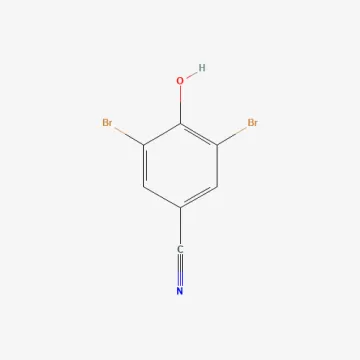
Description
Mode of action
Bromoxynil is a contact-acting herbicide belonging to the nitrile chemical class. Unlike systemic herbicides, it does not translocate significantly within the plant, acting primarily where the spray solution makes direct contact with the green tissue.
The primary mechanism of action involves the inhibition of photosynthesis. By interfering with electron transport in the photosystem II, the herbicide effectively shuts down the energy production cycle, leading to rapid tissue desiccation and weed death.
Because it is a contact herbicide, success depends heavily on spray coverage. Once the solution hits the leaves, the active ingredient causes cell membrane disruption, leading to visible chlorosis and necrosis in sensitive weed species within a few hours.
Bromoxynil demonstrates excellent crop selectivity. Cereal and corn plants are capable of metabolizing the compound into inactive, non-toxic substances, which allows the herbicide to target weeds without damaging the desirable crop.
Environmental conditions at the time of application significantly influence performance. Because it relies on active uptake, the herbicide is most effective when plants are actively growing and not under stress from drought or temperature extremes.
What it targets
Bromoxynil is primarily used to control a wide spectrum of broadleaf weeds. It is highly effective against many annual dicotyledonous species, especially those in the early stages of development (typically up to the 6-leaf stage).
Targeted weeds include species such as common lambsquarters, pigweed, shepherd's purse, and various knotweed species. It is particularly valued for its effectiveness against weeds that may have developed resistance to phenoxy-based herbicides like 2,4-D.
While effective on many broadleaf weeds, it has no impact on grass weeds. Therefore, it is frequently used as part of a tank mix with grass-specific herbicides to provide a comprehensive weed control program for cereal and corn farmers.
The herbicide is also useful for managing weeds with waxy leaf surfaces, where contact action is preferred over systemic uptake. Its fast-acting nature makes it an essential tool for rescuing crops from severe weed competition.
Due to its relatively short residual life in the soil, bromoxynil does not restrict subsequent crop rotations. This flexibility is a significant agronomic advantage, allowing growers to rotate into different crops without worrying about carryover injury.
Rates and timing
Recommended application rates vary based on the specific formulation and the growth stage of the target weeds. Generally, rates range from 0.4 to 1.2 liters of product per hectare, depending on local labeling and infestation density.
The ideal timing for application is when the weeds are small and actively growing. For cereal crops, this is usually from the tillering stage to the jointing stage; for corn, the window is generally from the 3 to 6-leaf stage.
Temperature plays a key role in product performance. The optimal temperature range for application is between 10°C and 25°C. In very cold weather, efficacy slows down, while in intense heat, the risk of crop burn increases due to rapid chemical activity.
Application requires adequate water volume, typically 200 to 300 liters per hectare, to ensure uniform coverage of the weed canopy. The use of specialized nozzles that produce fine to medium droplets is recommended for maximizing contact.
Application should be avoided if rain is forecasted within 2-4 hours, as the herbicide must dry on the foliage to be absorbed effectively. Rain shortly after application can wash the product away, necessitating a re-application.
Restrictions
A primary limitation of bromoxynil is its lack of residual soil activity. It only controls weeds that have already emerged, meaning it offers no protection against new germination cycles if the application is mistimed.
Growers should avoid applying the product to crops undergoing physiological stress, such as waterlogging, severe drought, or pest damage. Treating stressed crops may lead to temporary chlorosis or stunted growth of the desired crop.
Care must be taken when mixing bromoxynil with other pesticides or liquid fertilizers. Always perform a jar compatibility test to ensure the mixture does not coagulate or precipitate, which could clog spray equipment or reduce efficacy.
Users must wear appropriate personal protective equipment (PPE) during handling and application. Bromoxynil is an irritant and requires strict adherence to safety protocols to prevent inhalation or skin contact during the mixing process.
Because it is highly toxic to many broadleaf crops, spray drift must be carefully managed. Avoid spraying on windy days and use drift-reduction technology to prevent the herbicide from traveling to nearby sensitive fields or sensitive plant habitats.
Regulatory
Status in the European Union
Not approved in the EU
- CAS number
- 1689-84-5
- Category (EU)
- HB - Herbicide
- Approved from
- 01.03.2005
- Approval until
- 17.09.2020
- ADI
- 0.003 mg/kg bw/day
- ARfD
- 0.013 mg/kg bw
- AOEL
- 0.003 mg/kg bw/day
Hazard classification (CLP)
Acute Tox. 2 - H330Acute Tox. 3 - H301Aquatic Acute 1 - H400Aquatic Chronic 1 - H410Repr. 2 - H361dSkin Sens. 1 - H317
EU legislation
EU status is for reference only and does not replace national registration in your country.
Content graph
Connections · Bromoxynil
Most often together:
Marketplace
Products · 8


Zeagran 350, SE
Нуфарм Австралія Лтд. , Австралія (місце виробництва: Чілі
Herbicides
0
0
·
28
4 offers
16.78 €per 1 l
Buy

Zeagran 340, SE
Нуфарм Австралія Лтд. , Австралія (місце виробництва: Чілі
Herbicides
0
0
·
58
No offers
—
Details


