

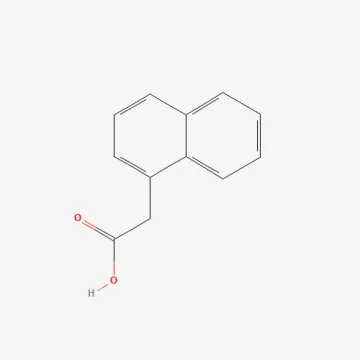
Description
Mode of action
1-Naphthaleneacetic acid (NAA) is a synthetic plant hormone belonging to the auxin family. It functions by mimicking naturally occurring auxins, which are essential for cell elongation and division within plant tissues.
The mechanism involves stimulating the activity of the cambium, which promotes the development of adventitious roots, making it a critical tool in plant propagation.
At the cellular level, NAA alters the plasticity of cell walls, allowing them to stretch under turgor pressure. This biological process drives the primary growth of roots and shoots.
NAA acts systemically, meaning it is absorbed by the plant and translocated through vascular tissues to exert a physiological effect on various parts of the plant organism.
Beyond its growth-promoting properties, NAA regulates the transport of other metabolites, influencing the overall hormonal balance and developmental trajectory of the treated plant.
What it targets
The primary use of NAA in agriculture is to stimulate root growth in cuttings, drastically increasing the success rate of propagation for various horticultural and ornamental species.
It is widely utilized in fruit cultivation to control the shedding of young fruit. NAA helps trees retain fruit, which is crucial for achieving consistent yields in commercial orchards.
Conversely, when applied at specific developmental stages, it serves as a thinning agent to reduce fruit load, ensuring that the remaining fruits reach their optimal size and quality.
NAA is also employed to enhance the establishment of vegetable transplants, helping young plants overcome the shock of transplanting into new soil conditions.
- Fruit-bearing trees (Apples, Pears)
- Ornamental nursery stock
- Vegetable crops
- Vineyards
Rates and timing
Application rates vary significantly based on the plant species and the intended physiological outcome. Precise dilution is necessary to ensure the hormone triggers the desired effect rather than causing stress.
For rooting cuttings, dip treatments are standard, where the basal end of the stem is briefly immersed in a controlled concentration of the solution.
Timing is critical when using NAA as a fruit thinner or anti-drop agent. It must be applied at the precise phenological stage to be effective and avoid damage to the tree.
Users should always perform a calibration of spraying equipment to ensure an even distribution of the product across the treated area, preventing localized over-concentration.
Freshly prepared solutions are recommended for maximum efficacy, as the stability of the active ingredient can degrade if left standing in the spray tank for too long.
Restrictions
Handling 1-Naphthaleneacetic acid requires appropriate personal protective equipment to avoid irritation or potential systemic exposure. Always follow local safety guidelines.
Environmental care must be prioritized; users must prevent the runoff of chemicals into local waterways, as synthetic auxins can disrupt local aquatic plant balances.
Store the product in its original, sealed container in a cool, dry place. Ensure it is kept out of reach of children, pets, and away from livestock feed or food supplies.
Check for compatibility before tank-mixing NAA with other pesticides or fertilizers, as the pH levels or chemical additives of other products can interfere with its activity.
Avoid applications during periods of extreme heat or strong wind to ensure accuracy and minimize the risk of drift to non-target areas or sensitive crops.
Regulatory
Status in the European Union
Approved in the EU
- CAS number
- 86-87-3
- Category (EU)
- AT - Attractant
- Approved from
- 01.01.2012
- Approval until
- 30.11.2029
- ADI
- 0.1 mg/kg bw/day
- ARfD
- 0.1 mg/kg bw
- AOEL
- 0.07 mg/kg bw/day
EU legislation
EU status is for reference only and does not replace national registration in your country.
Content graph
Connections · 1-Naphthylacetic acid
Most often together:
Marketplace
Products · 4

Refine
Fine Agrochemicals Ltd., United Kingdom
Plant Growth Regulators
0
0
·
75
1 offer
154.79 €per 1 l
Buy


Norolak
Vast Agrochemical International Limited
Plant Growth Regulators
0
0
·
55
No offers
—
Details