
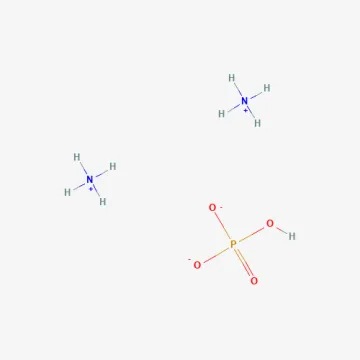
Diammonium phosphate
Description
Mode of action
Diammonium phosphate (DAP) is a concentrated phosphorus-nitrogen fertilizer widely used in professional agriculture to ensure optimal plant development.
Its primary mechanism involves the rapid supply of ammonium and phosphate ions to the soil, which are essential for vital physiological processes in plants.
Phosphorus, as a key component of DAP, is essential for energy storage and transfer, stimulating root growth and early crop maturation during the critical initial phases.
The ammonium form of nitrogen contained in the product provides a sustained source of nutrition, being less susceptible to leaching compared to nitrate forms.
DAP is highly water-soluble, ensuring that nutrients become readily available to the root system shortly after application, making it an excellent starter fertilizer.
What it targets
DAP is applied to a broad range of crops, including cereals, maize, oilseeds, vegetables, and various horticultural crops that require high phosphorus input.
It is specifically used to prevent phosphorus deficiency, which manifests as stunted growth, dark blue or purple leaf discoloration, and poor root formation.
- Cereal crops for enhanced winter hardiness and early spring vigor.
- Maize and sunflowers for accelerated biomass accumulation.
- Vegetable crops to improve yield quality and fruit development.
- Leguminous crops for better nodulation and nutrient uptake.
The application of DAP is beneficial in various soil types, particularly where improving early-stage development and structural plant integrity is a priority.
By providing essential nutrients in a balanced ratio, DAP helps maximize yield potential even under challenging environmental conditions.
Rates and timing
Application rates for diammonium phosphate should be based on soil testing and the specific nutrient requirements of the target crop species.
Banding or row application at seeding is generally the most efficient method, placing the fertilizer within the optimal range of the developing root zone.
Typical field application rates range from 100 to 300 kilograms per hectare depending on the soil fertility levels and the expected yield goal.
The best timing for DAP application is either during pre-planting soil preparation or precisely at the time of seeding to provide immediate nutrient availability.
Growers should monitor the placement of the fertilizer to avoid direct contact with seeds, which could potentially cause germination issues due to salt concentration.
Restrictions
Safety protocols during handling include the use of personal protective equipment, such as gloves and dust masks, to prevent skin and respiratory irritation.
Storage requirements include keeping the material in a cool, dry place, as it tends to absorb moisture, which can cause caking and handling difficulties.
DAP should not be mixed with alkaline fertilizers to prevent chemical reactions that may cause nitrogen loss in the form of ammonia gas.
Soil pH levels should be monitored, as extremely acidic soil conditions can decrease the plant's ability to access the phosphorus provided by the fertilizer.
Excessive application should be avoided to prevent nutrient imbalances that might lead to negative interactions with other essential micro-elements in the soil.
Status in the European Union
Approved in the EU
- CAS number
- 7783-28-0
- Category (EU)
- AT - Attractant
- Approved from
- 29.04.2016
- ADI
- Not appl.
- ARfD
- Not appl.
- AOEL
- Not appl.
EU status is for reference only and does not replace national registration in your country.