
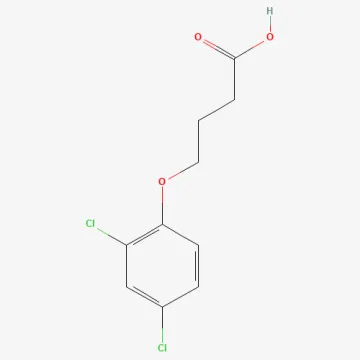
2,4-DB
Description
Mode of action
2,4-DB (2,4-dichlorophenoxybutyric acid) is a systemic selective herbicide belonging to the phenoxycarboxylic acid family.
Its selectivity is based on a specific metabolic process: susceptible weeds convert 2,4-DB into the active and highly toxic 2,4-D, while tolerant legume crops are unable to perform this conversion.
Upon absorption through the foliage, the substance translocates via the phloem to the meristematic tissues and growth points of the target plants.
The compound acts as a synthetic auxin, causing extreme hormonal imbalance, which results in uncontrolled cell division, severe twisting, and plant deformation.
The physiological stress leads to the death of weeds, while the crop remains unharmed due to its metabolic pathway, which prevents the production of the active toxic agent.
What it targets
2,4-DB is primarily used to control annual and perennial broad-leaved weeds in various legume crops, such as alfalfa, clover, and chickpeas.
The herbicide effectively targets invasive species like lambsquarters, mustards, pigweed, and various ragweed species.
It is most effective when weeds are young and in the active stage of development, typically at the seedling or early true-leaf stage.
Legume crops are the main beneficiaries, as this herbicide allows for weed control in fields where conventional herbicides would cause significant crop injury.
Proper weed identification is crucial to ensure the herbicide will effectively manage the specific spectrum of weeds present in the field.
Rates and timing
Application rates of 2,4-DB depend on the crop type, the weed species density, and the growth stage of the plants involved.
Treatments should be applied when the legume crop is in the appropriate growth stage, usually after several true leaves have developed.
Temperature plays a vital role in efficacy; treatments should ideally be performed under moderate temperatures, between 15°C and 25°C.
Environmental factors such as moisture availability significantly influence the herbicide's effectiveness; avoid applications during severe drought.
- Follow specific product labels for accurate dilution rates.
- Ensure uniform spray coverage to maximize efficacy.
Restrictions
Safety is a priority when handling 2,4-DB; personal protective equipment should be used during preparation and application.
Drift management is essential, as many vegetable and ornamental crops are highly sensitive to even trace amounts of this herbicide.
Applications should not be performed during windy conditions to prevent the contamination of sensitive areas or nearby bodies of water.
Adherence to pre-harvest intervals is mandatory to ensure food safety and regulatory compliance.
Storage of the chemical must be in a secure, cool, and well-ventilated area, keeping it away from food supplies and unauthorized personnel.
Status in the European Union
Approved in the EU
- CAS number
- 94-82-6
- Category (EU)
- AT - Attractant
- Approved from
- 01.11.2017
- Approval until
- 31.10.2032
- ADI
- 0.02 mg/kg bw/day
- ARfD
- 0.3 mg/kg bw
- AOEL
- 0.02 mg/kg bw/day
EU status is for reference only and does not replace national registration in your country.