
Profile Pipe: Types, Applications, and Selection
Profile pipe is a hollow metal profile with equal wall thickness around its entire perimeter. The Kyiv metal products market offers a wide variety of such products, differing in cross-sectional shape, dimensions, and characteristics.
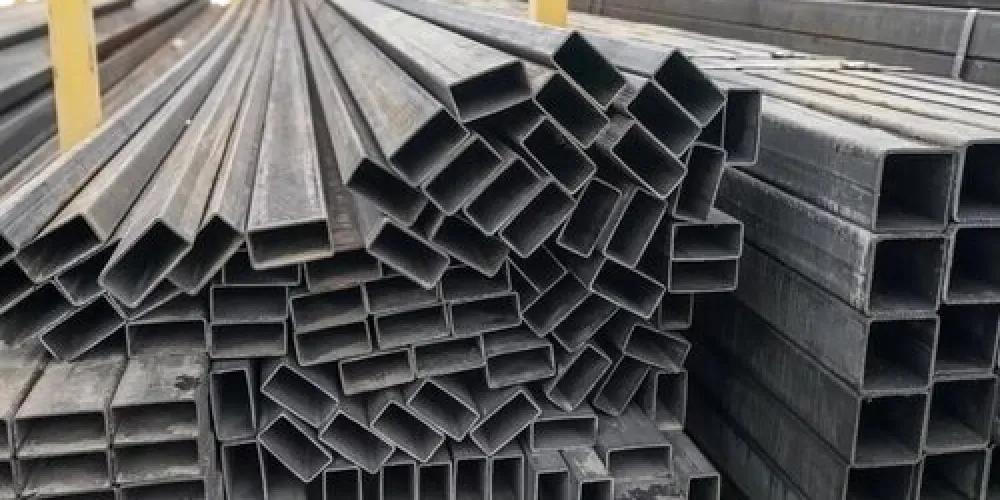
Profile pipe is a hollow metal profile with equal wall thickness around its entire perimeter. The Kyiv metal products market offers a wide variety of such products, differing in cross-sectional shape, dimensions, and characteristics. Due to its geometry, profile pipe provides high resistance to mechanical loads while maintaining minimal self-weight, making it an ideal material for constructing frames, beams, and other load-bearing structures.
Main Types of Profile Pipes and Their Classification
Profile pipes are classified by several key parameters.
By cross-sectional shape:
- Square – the most popular type, used for creating right angles.
- Rectangular – provide different stiffness depending on the direction of load.
- Oval – used in design solutions and special constructions.
- D-shaped and other special forms.
By size:
- Small (from 10x10 mm to 40x40 mm) – for light structures.
- Medium (from 40x40 mm to 100x100 mm) – for typical construction work.
- Large (over 100x100 mm) – for industrial construction.
- By wall thickness (from 1 mm to 8 mm and more).
By material of manufacture:
- Ordinary structural steel (St3).
- Low-alloy steel (09G2S).
- Stainless steel.
- Aluminum.
Main Applications of Profile Pipes
The versatility of profile pipes makes them widely used in various industries:
- Construction – building frames, canopies, greenhouses, fences, staircases, railings.
- Machinery manufacturing – car frames, agricultural machinery
- Furniture manufacturing – table and chair frames, shelves, cabinets.
- Advertising structures – billboards, signs, stands.
- Private construction – small architectural forms, fences, gates, car canopies.
Due to their relatively easy processing, profile pipes can be easily cut, welded, and connected, allowing for the creation of structures of any complexity.
How to Choose the Right Profile Pipe for Specific Tasks
When selecting profile pipe, the following factors should be considered:
- Load type – for vertical load-bearing elements, square pipes are typically used, while for horizontal spans, rectangular pipes with greater height are preferred.
- Wall thickness – the thicker the wall, the greater the load capacity.
- Steel grade – for critical structures, low-alloy steels with enhanced strength are preferable.
- Corrosion protection – for outdoor applications, galvanized pipes or additional anti-corrosion treatments are recommended.
- Price-to-quality ratio – it is important to find an optimal balance between cost and material properties.
Professional Tips: How to Choose Quality Profile Pipe
"Mix Trading" is one of the leading suppliers of metal products in Kyiv and offers a wide range of profile pipes of various types. The company's experts provide the following recommendations:
- Choose pipes from reputable manufacturers that comply with national standards.
- Pay attention to the geometry of the pipe – quality products have equal angles and surfaces.
- Check wall thickness – it should be uniform around the entire perimeter.
- For complex structures, order calculations from professionals.
- Consider operating conditions when selecting material and protective coating.
"Mix Trading" always has profile pipes of various sizes and configurations in stock, allowing you to select the optimal option for any project.
When choosing profile pipe for your projects, it is advisable to consult reliable suppliers who guarantee product quality and can provide professional advice on selecting the optimal option for specific tasks.
Editorial team agronom.info
Materials are prepared by the portal's agronomists and editors. We use only trusted sources: Ukrainian agricultural universities, variety registries, open scientific publications.
Related articles


Not yet comments. Be the first!
Comments · 0