
Professional Cutting and Edge Banding of Panel Materials: How to Save Budget When Assembling Furniture
Custom-sized furniture usually costs more, but it is by no means necessary to order it in an expensive showroom. Independent design and assembly according to ready-made drawings allows you to save up to 50% of the cost depending on the…
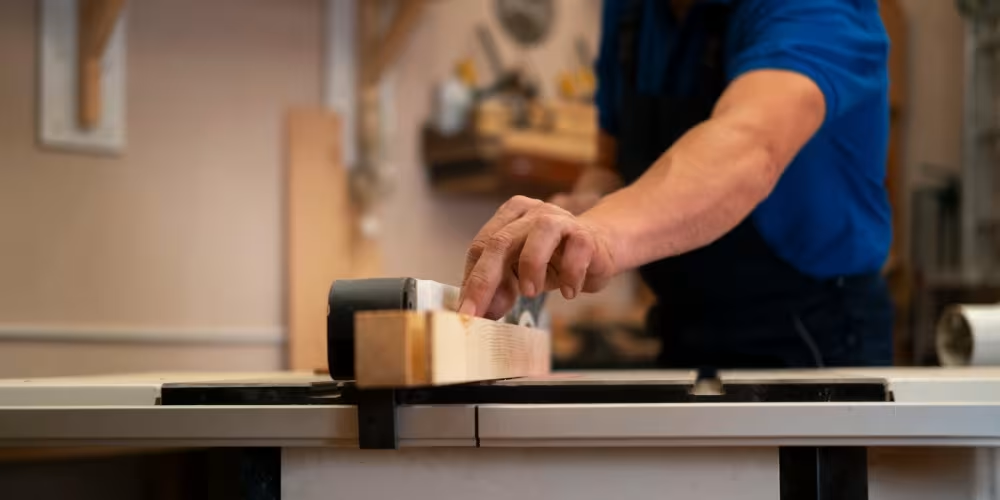
Custom-sized furniture usually costs more, but it is by no means necessary to order it in an expensive showroom. Independent design and assembly according to ready-made drawings allows you to save up to 50% of the cost depending on the complexity of the structure, materials, and hardware. At the same time, the quality of the result largely depends on the precision of manufacturing the parts.
Professional cutting and edge banding of panels helps avoid mistakes, reduce the amount of waste, and obtain neat elements ready for assembly. Let's look at how to properly organize this process and what you can save on without losing quality, and which services are better to order from specialists.
Why Precise Panel Cutting is Difficult to Do at Home
At first glance, it seems that cutting chipboard (DSP) or MDF can be done with a regular circular saw or jigsaw. However, for furniture manufacturing, it is important to obtain not just parts of the required size, but also smooth edges without chips, precise geometry, and identical parameters for all elements.
In furniture production facilities for cutting and edge banding of chipboard or other panel materials, panel-sizing saws with a scoring blade are used. The main saw cuts the panel to a specified depth, while the scoring blade pre-cuts the lower layer of laminate, preventing it from chipping. Thanks to the rigid fixation of the material and precise equipment adjustment, it is possible to obtain smooth ends and maintain the required dimensions.
Another important nuance is the thickness of the saw blade kerf, which typically ranges from 3.2 to 4 mm depending on the tool. This indicator is necessarily taken into account when planning the cutting layout. For example, if ten parts need to be cut from a single panel, the total material loss for nine dividing cuts can be approximately 29-36 mm. Without taking these losses into account, some of the blanks simply might not fit on the sheet.
Home cutting using a quality guide rail and appropriate tools can also provide a good result. However, when it is necessary to obtain a large number of furniture parts, professional equipment allows achieving higher repeatability of sizes, reducing the risk of defects, and saving time during the subsequent assembly of the structure.
Panel Edge Banding: Types of Edges and Application Technology
After cutting, the edges of chipboard and MDF remain open and therefore require protective cladding. Edge banding of MDF and chipboard panels not only gives the furniture a finished look but also protects the edges from mechanical damage, dirt, and moisture penetration.
Main types of furniture edges:
Melamine edge. A budget material on a paper base impregnated with resins. Due to its small thickness and low impact resistance, it wears out faster, can peel off, and become damaged under the influence of moisture. Therefore, for durable furniture, especially kitchen furniture, its use is impractical. In modern furniture production, it is practically unused.
PVC edge. An elastic and wear-resistant material that effectively protects edges from impacts and moisture under normal household operation. For internal shelves and low-load parts, a thickness of 0.4 mm is usually sufficient, while for facades, countertops, and other exposed elements, 2 mm is often chosen for better protection against damage.
ABS edge. Made from a durable chlorine-free thermoplastic polymer. It is characterized by impact resistance, color stability, and recyclability. It is used for high-quality finishing of furniture facades and decorative details.
For reliable edge attachment, precise glue application, correct temperature, and uniform pressing are important. PUR glue deserves special attention—a polyurethane thermosetting composition that, after curing, forms a strong bond with high resistance to moisture and temperature fluctuations.
This edge attachment technology is especially useful for kitchens and bathrooms, where furniture is regularly exposed to steam and high humidity. At the same time, it does not make the panel itself completely waterproof. Professional edge banding of chipboard and MDF on specialized equipment ensures uniform cladding fit, neat joints, and a longer service life of the furniture.
How to Properly Prepare the Cutting Layout and Specification
A properly compiled chipboard cutting layout helps to rationally place parts on the sheet, reduce waste, and avoid mistakes during production. To prepare it, you need to create a specification—a list of all furniture elements indicating sizes, quantity, material, and finishing features.
Special attention should be paid to the following points:
Wood grain direction. If the panel has a decorative pattern, it is necessary to indicate the grain orientation for each part. For example, on wardrobe facades, the texture should usually run vertically, while on horizontal elements—along their length. Incorrect placement of parts can negatively affect the integrity of the design.
Designation of edge banding sides. In the order form, you must clearly indicate which ends of each part require cladding, as well as the type and thickness of the edge. For this, schematic designations of the four sides or corresponding specification columns are used.
It is also important to agree with the provider of panel cutting and edge banding whether the specified dimensions of the parts already account for the edge thickness. Before submitting the order to production, it is worth double-checking the number of elements, their orientation, and compliance with the drawings. This will help avoid additional costs for remanufacturing parts.
At the «Ecolis» company, you can buy high-quality MDF and chipboard panels and immediately order professional material cutting according to individual sizes. Chipboard cutting in Kyiv will be convenient both for furniture workshops and private customers planning independent furniture assembly. The cost of material cutting depends on the order volume, cutting complexity, number of parts, and edge banding parameters.
And the final stage of furniture manufacturing is inspecting the received parts. When accepting the order at the warehouse, you should pay attention to the following criteria:
edges of the panels—absence of chips, cracks, and laminate damage;
edge banding quality—tight fit of the edge without gaps, peeling, and glue residues;
geometry of parts—compliance of dimensions with drawings, evenness of ends, and right angles;
completeness—presence of all elements in accordance with the specification.
Thorough inspection will help identify flaws before installation begins and avoid unforeseen expenses. Entrust the cutting and edge banding of panel materials to professionals!
Editorial team agronom.info
Materials are prepared by the portal's agronomists and editors. We use only trusted sources: Ukrainian agricultural universities, variety registries, open scientific publications.
Related articles



Not yet comments. Be the first!
Comments