
Endecatomus
Endecatomus
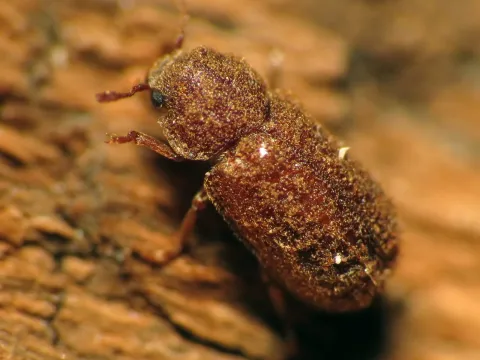
Endecatomus is a genus of beetles belonging to the Ciidae family (minute tree-fungus beetles), sometimes categorized within a specific family named Endecatomidae.
What the section contains
Endecatomus
The adult beetles are characterized by a cylindrical, moderately elongated body, typically measuring between 2 and 5 millimeters in length, with a dark brown or black coloration.
The name of the genus refers to their specific 11-segmented antennae, which serve as a primary taxonomic marker for identifying these insects.
The larvae possess a typical appearance for wood and fungus feeders: they are pale, slightly curved, with a robust head and mouthparts adapted for boring into solid substrates.
Their development is strictly dependent on the presence of wood-decaying fungi, making them a significant component of the entomofauna in forest ecosystems.
The primary food source for Endecatomus species is the fruiting bodies of bracket fungi (polypores) growing on both living and dead trees.
The damage caused by these beetles involves boring tunnels through the fungal tissue, which destroys the hymenium and the structural integrity of the mushroom.
While these beetles do not directly attack healthy living wood, their activity accelerates the decomposition of fungal bodies, which can have an impact on forest pathology.
In cases where fungi are cultivated, Endecatomus can cause significant economic losses by rendering the produce unmarketable due to internal damage.
Continuous feeding by beetle populations turns the infected mushroom body into a fragile, hollow structure filled with frass and decaying debris.
Adult activity typically begins in early spring, as temperatures rise, signaling the emergence of overwintering beetles to start the new reproductive cycle.
The peak activity period occurs during the summer months when environmental conditions are optimal for the rapid development of fungal fruiting bodies and, consequently, the insects.
The number of generations per year depends on the climatic zone, with warmer regions potentially supporting multiple overlapping life cycles.
Overwintering occurs at the adult stage, where the beetles seek shelter in protected areas such as bark crevices, fallen logs, or inside dry, empty fungal shells.
As autumn temperatures drop, the metabolic activity of the beetles slows down, and they enter a state of diapause until the return of favorable spring conditions.
The most common sign of an Endecatomus infestation is the presence of small, perfectly round exit holes on the surface of the fungal fruiting body.
Frass, or fine wood-and-fungus "dust" found accumulating around the base of the fungus, is a clear indicator that larvae are actively feeding inside.
Cross-sectioning the infected fruiting body reveals a complex network of tunnels packed with excrement and pulverized organic matter.
Outwardly, an infested mushroom might appear intact, but it often feels soft or brittle when touched, indicating the internal loss of tissue.
An unpleasant, musty odor often accompanies a heavy infestation, resulting from secondary fungal or bacterial growth within the beetle tunnels.
Effective management in natural forests involves proactive sanitary practices, such as removing heavily infested logs and clearing deadwood that supports fungal growth.
In cultivation facilities, strict sanitation protocols must be followed to prevent the migration of beetles from wild sources into the production area.
Maintaining proper humidity and air circulation levels in mushroom-growing environments can help discourage infestation by these insects.
Biological control strategies, such as the use of natural predators or entomopathogenic agents, can be employed to manage beetle populations without chemical intervention.
If chemical control becomes necessary in specific storage or cultivation scenarios, registered insecticide applications should be performed following local agricultural guidelines.