
Gladiolus thrips
Thrips simplex
Gladiolus thrips (Thrips simplex) is a member of the Thysanoptera order and the Thripidae family. These insects are very small, measuring approximately 1–1.5 mm in length, with slender dark brown or black bodies.
What the section contains
Gladiolus thrips
Adult thrips possess two pairs of narrow wings fringed with hairs, which they use for flying between host plants. The larvae are smaller, wingless, and usually appear yellowish or orange in color.
These insects prefer secluded areas, hiding within leaf sheaths, flower buds, or under the protective scales of corms. They thrive in warm, dry conditions, which accelerate their life cycle.
Under optimal temperature conditions, a generation can develop in as little as two weeks. Females lay eggs directly into plant tissues, making the population difficult to detect in the early stages.
The species is highly resilient and can remain active throughout the winter if stored corms are kept in warm environments, continuing to feed and reproduce.
The primary host is the Gladiolus genus, though thrips can also affect irises, carnations, and various other ornamental plants if their main food source is unavailable.
Thrips pierce plant cells and suck out the sap, leading to stunted growth, wilting, and the eventual destruction of the plant's photosynthetic capacity.
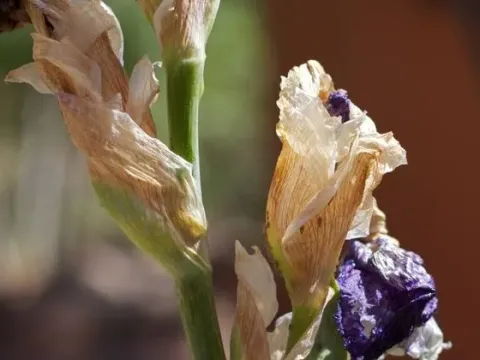
When attacking flowers, the pest causes severe cosmetic damage, resulting in deformed, discolored petals that look scorched or papery rather than vibrant.
Storage damage is particularly devastating; thrips feed on the surface of the corms, creating brown, corky patches that often lead to rot and total failure to sprout in spring.
Beyond physical destruction, Thrips simplex is a known vector for various plant viruses, contributing to the spread of mosaic diseases that cause permanent decline in flower stock.
The first signs of infestation are silver or white streaks on the leaves, caused by the destruction of chlorophyll cells as the thrips feed on the plant tissues.
Severely infested flower spikes may fail to open entirely. If buds do bloom, the edges of the petals appear brown, dry, and crumpled, drastically reducing their beauty.
Inspecting stored corms often reveals the presence of the pest through sticky, dark excrement spots and rough, leathery areas where the outer skin has been compromised.
Plants struggling with high infestation levels will show yellowing foliage that turns brown and brittle, as the plant can no longer maintain its water balance.
During a close visual check, especially on warm days, one might observe the tiny insects scurrying away when the leaves or petals are disturbed or opened.
Hot water treatment is a standard and highly effective control method: immerse dormant corms in water at +50 °C for 5–10 minutes before spring planting.
Systemic insecticides are recommended for foliage treatment during the growing season to ensure the chemical reaches insects hiding inside the tightly closed buds.
Cultural practices, such as removing and destroying all infested plant debris and weeds, help limit the overwintering population and prevent re-infestation.
Proper storage is essential; keeping corms at temperatures below +5 °C effectively puts the insects into dormancy, preventing them from feeding during the winter months.
Integrated pest management, including the use of blue or yellow sticky traps for monitoring, allows gardeners to detect the arrival of thrips early and respond before an outbreak occurs.