
Thrips
Thrips
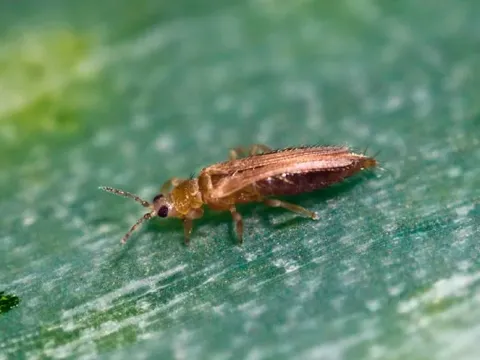
Thrips (order Thysanoptera) are tiny, slender insects, usually measuring between 0.5 mm and 2 mm in length. They are characterized by two pairs of narrow, fringed wings, which gives them the name "fringe-winged insects."
What the section contains
Thrips
The life cycle consists of egg, larva, prepupa, pupa, and adult stages. Depending on the species, pupation may occur in the soil, in leaf litter, or on the plant itself, making them difficult to target.
Their coloration typically ranges from pale yellow to brown or black. Because of their small size and ability to hide in tight crevices, they are often overlooked until significant damage occurs.
They possess mouthparts that function as a rasping-sucking mechanism, allowing them to puncture plant cell walls and feed on the contents, leaving behind damaged tissues.
Thrips are prolific breeders. Under warm, favorable conditions, they can complete their entire life cycle in less than three weeks, leading to rapid population explosions.
Thrips are significant polyphagous pests that affect a wide range of horticultural, agricultural, and ornamental crops. Common hosts include tomatoes, cucumbers, peppers, onions, and various flowers.
Greenhouse environments are particularly susceptible because the controlled conditions provide a stable habitat, allowing thrips to thrive and reproduce continuously throughout the year.
Beyond the direct physical damage caused by feeding, thrips serve as primary vectors for several critical plant viruses, most notably the Tomato Spotted Wilt Virus (TSWV).
Feeding damage can lead to stunted plant growth, reduced fruit yield, and significant cosmetic damage that renders products unfit for sale, causing substantial economic losses.
In ornamental plants, the feeding activity results in discolored and distorted blooms, which significantly reduces the aesthetic and market value of the flowers.
The primary symptom of a thrips infestation is the presence of small, silvery or white streaks on the foliage, caused by air entering the empty cells after the contents have been sucked out.
Small, dark, waste deposits (frass) left by the insects are often visible on the undersides of leaves, providing a clear indication of their presence.
Flowers often show irregular discoloration, brown spots, or necrotic patches, and they may fail to open fully or suffer from petal distortion.
When infestation is severe, leaves may dry out, curl, or fall off prematurely. Terminal shoots often become twisted or stunted as the insects cluster in the growing points.
Blue sticky traps are highly recommended for monitoring purposes, as thrips are significantly more attracted to the blue color than to yellow traps typically used for other pests.
Effective management requires an Integrated Pest Management (IPM) approach that combines cultural practices, biological controls, and judicious chemical use.
- Remove weeds and debris around growing areas to eliminate potential alternative host plants for thrips.
- Maintain optimal humidity levels, as many thrips species thrive in dry, hot conditions and are inhibited by higher humidity.
- Introduce natural predators such as predatory mites (e.g., Amblyseius) or pirate bugs (Orius) in greenhouse settings.
- Apply systemic insecticides, ensuring thorough coverage, especially on the undersides of leaves and growing points.
- Rotate different classes of insecticides to prevent the development of resistance in thrips populations.
Post-season sanitation is crucial; cleaning greenhouse structures and sterilizing soil helps eliminate overwintering pupae and prevents early-season re-infestation.
Repeated applications are usually necessary to manage the population because the pupal stage in the soil and eggs protected inside plant tissues are often immune to standard sprays.
Regular monitoring with blue traps allows for early detection, which is the most important factor in keeping populations below the economic threshold.