
Tobacco thrips
Thrips parvispinus
Description
How to identify
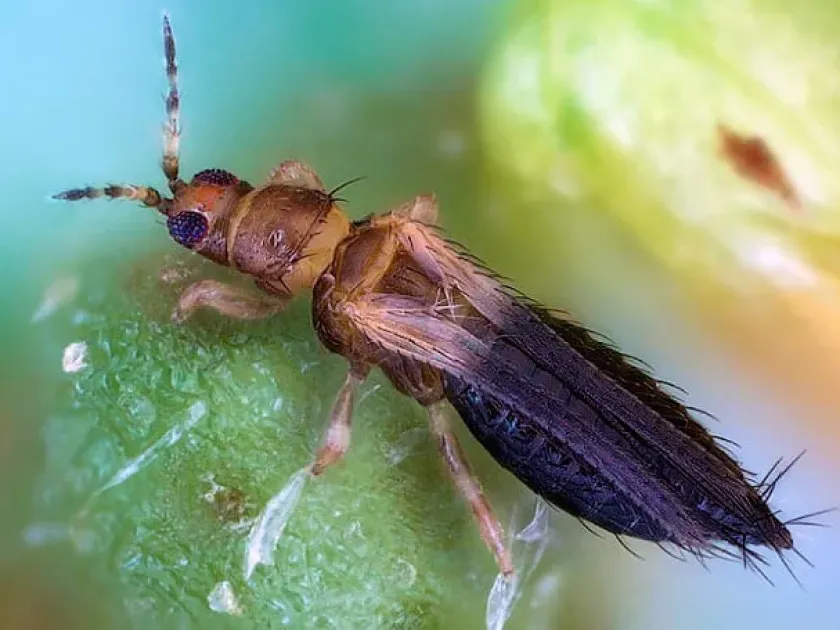
Thrips parvispinus is a minute insect, typically measuring 1 to 1.2 mm in length. Its color ranges from pale yellow to dark brown, which often makes it difficult to spot with the naked eye among foliage.
The insect possesses a piercing-sucking mouthpart specialized for extracting nutrients from the epidermal cells of leaves, stems, and flower buds. Eight-segmented antennae are a key diagnostic feature for professionals.
These thrips have narrow, fringed wings that allow them to spread easily via wind currents. Adults and larvae often congregate on the undersides of leaves, making early detection a significant challenge.
Due to its high morphological similarity to other thrip species, accurate identification requires the use of specialized keys or molecular analysis by an experienced entomologist.
Blue sticky traps are widely used in commercial greenhouse monitoring, as Thrips parvispinus shows a high preference for blue surfaces compared to yellow ones.
What it damages
This species is a highly polyphagous pest that affects a vast range of crops, including peppers, eggplants, beans, and various ornamental plants in both greenhouses and open fields.
The feeding activity involves piercing plant cells and sucking out the contents, which leads to the collapse of local tissues, reduced photosynthesis, and overall plant stress.
Severe infestations cause significant distortion of growing tips, leading to leaf curling, stunted growth, and a reduction in the plant's ability to develop healthy flowers or fruit.
Beyond direct feeding damage, Thrips parvispinus acts as a vector for various plant viruses, which can cause even more devastating economic losses than the feeding damage itself.
Fruit crops often exhibit unsightly scarring, silvering, or necrotic patches in areas where the thrips have fed, rendering the produce unmarketable for retail markets.
When it appears
The life cycle of Thrips parvispinus is highly dependent on temperature. In warm environments, such as greenhouses, the entire life cycle can be completed in just 10 to 14 days.
This rapid development leads to multiple overlapping generations throughout the year, meaning populations can build up to destructive levels very quickly if left unchecked.
Eggs are inserted into plant tissue, protecting them from many contact-based treatments. Larvae emerge and immediately begin feeding on the host plant's tender tissues.
The pupal stage often occurs in the soil or growing media, creating a reservoir of the pest that can re-infest plants even after foliage treatments have been applied.
Activity peaks during flowering periods when the thrips invade blooms to feed on pollen and delicate petals, often leading to flower drop and poor fruit set.
Signs of infestation
- Silverish or whitish streaks and stippling on the surface of leaves.
- Tiny black fecal specks scattered across the underside of the leaves.
- Deformed, crinkled, or curled terminal leaves that fail to expand properly.
- Presence of necrotic spots that eventually turn brown and dry.
- Premature flower abortion and poor development of young fruit.
When shaking a leaf or flower over a white piece of paper, small, fast-moving insects may be visible, which is a common field method for assessing population density.
In cases of heavy infestation, the entire plant may show signs of chlorosis, appearing pale or yellowed compared to healthy, non-infested neighboring plants.
Fruits may develop a 'corky' texture or abnormal surface scarring due to the plant's defense response and the damage caused by the insects' mouthparts.
The presence of adults on sticky traps, combined with the observation of leaf stippling, confirms an active infestation that requires immediate intervention.
Control measures
Effective management of Thrips parvispinus requires an Integrated Pest Management (IPM) approach that combines cultural, biological, and chemical control measures.
Cultural practices include rigorous weeding to eliminate alternative hosts and the removal and destruction of heavily infested plant materials to prevent further spread.
Biological control involves the strategic release of natural predators, such as predatory mites (e.g., Amblyseius spp.) or minute pirate bugs (Orius spp.).
Chemical control should rely on the rotation of insecticides with different modes of action to manage the risk of developing resistance, which is common in this species.
Systemic insecticides are generally preferred as they ensure that the active ingredient reaches the hidden larvae located within the folds of the leaves or inside flower buds.
Taxonomy
- Latin name
- Thrips parvispinus
- Order
- Thrips
- Family
- Thripidae
- EPPO code
- THRIPV
Discussion
No discussions yet — be the first.