
Taeniothrips
Taeniothrips
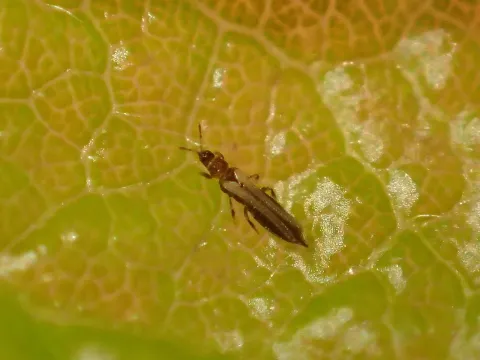
Taeniothrips is a genus of insects belonging to the family Thripidae, within the order Thysanoptera. These are minute insects, typically ranging from 1 to 2 mm in length.
What the section contains
Taeniothrips
The adult form features an elongated, slender body, usually colored brown or black. They possess specialized piercing-sucking mouthparts designed to feed on plant cell contents.
Their wings are narrow and adorned with long hairs, a distinct characteristic of the order, which aids their movement and dispersal within and between crop fields.
The life cycle encompasses several stages: egg, larva, prepupa, pupa, and adult. This multi-stage development allows them to adapt to various environmental conditions.
Field identification usually involves the use of a hand lens to inspect the undersides of leaves and buds, where these insects tend to aggregate during the early morning or late afternoon.
This pest affects a wide array of crops, including vegetables, flowers, and various ornamental plants. Roses, gladioli, and Solanaceae crops are among the most frequently attacked.
Both larvae and adults feed on plant juices. By piercing the epidermal cells, they induce cell collapse, leading to the characteristic silvery appearance of affected leaf tissues.
Heavy infestations result in significant deformation of growth, such as twisted leaves and stunted buds. Flowers often fail to open properly and may show distorted petals.
Beyond direct damage, Taeniothrips serves as a vector for various plant viruses, such as Tomato Spotted Wilt Virus (TSWV), which can devastate an entire harvest.
Plants weakened by thrips activity exhibit reduced vigor, poor growth, and, in severe cases, may die due to the combined impact of nutrient loss and secondary infections.
The population dynamics of Taeniothrips are highly influenced by temperature. In greenhouse environments, they can remain active and reproduce throughout the year.
In open fields, their activity begins as temperatures rise in the spring. Population peaks usually coincide with hot, dry weather conditions during the mid-to-late summer months.
Under optimal conditions, the generation time can be as short as two to three weeks, allowing for rapid outbreaks in favorable climates.
They overwinter as adults in protected locations such as soil, plant debris, or within the protective layers of bulbs, which makes them highly resilient to cold periods.
As autumn temperatures decrease, their metabolic activity slows down, and they seek refuge in sheltered environments to enter a period of dormancy until spring.
The first signs of an infestation include small, whitish or silvery streaks or patches on the leaves. These spots gradually expand as the tissue dies.
Tiny black spots, representing fecal deposits, are frequently visible on the underside of infested leaves, serving as a key diagnostic indicator for the presence of thrips.
Deformed or scarred blossoms are another classic sign. The petals may show discoloration or necrotic areas, which significantly impacts the aesthetic and market value of the crop.
Overall plant growth may appear sluggish, and in extreme cases, the plant may exhibit signs of severe drought stress despite adequate irrigation due to tissue damage.
Shaking the foliage over a sheet of white paper will often dislodge the insects, revealing their presence and allowing for a rough estimate of the infestation level.
Effective management requires an integrated approach that combines cultural, biological, and chemical strategies to minimize the pest impact.
- Use blue or yellow sticky traps for monitoring populations and capturing active adults to reduce local pest pressure.
- Employ systemic insecticides that reach the pests hidden inside buds or rolled leaves for maximum efficacy.
- Maintain proper greenhouse hygiene, including weed control and the removal of plant debris that may harbor overwintering individuals.
- Disinfect planting materials, such as bulbs or seedlings, before introducing them to the field to prevent importing the pest.
- Utilize biological control agents, such as predatory mites or beneficial fungi, to keep populations under the economic injury threshold.
Rotating chemical classes is crucial to prevent the development of insecticide resistance in Thripidae populations, which can often occur with frequent, identical treatments.
Integrated pest management strategies should focus on preventing population surges through consistent monitoring and timely intervention during the most vulnerable life stages.