
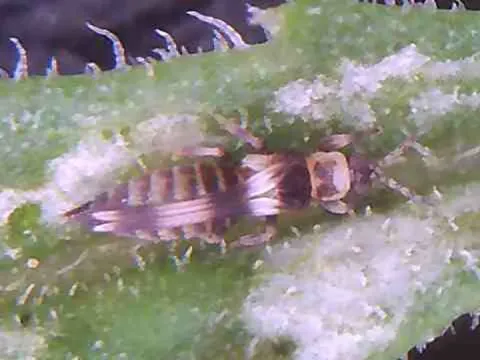
Neohydatothrips
Neohydatothrips
Neohydatothrips is a genus of insects belonging to the order Thysanoptera and the family Thripidae. These are small, slender insects that thrive in various agricultural environments, often going unnoticed due to their size.
What the section contains
Neohydatothrips
Adults typically measure between 1 and 2 millimeters in length. Their bodies range in color from pale yellow to dark brown, allowing them to blend in with the leaves and stems of host plants.
The wings are characterized by long, fine hairs (fringe), which allow them to be carried by wind currents over long distances, aiding in the rapid colonization of new fields.
Their life cycle includes egg, larval, pupal, and adult stages. The pupal stage often occurs in the soil or in protected micro-habitats, making it difficult to target with surface-applied insecticides.
Their mouthparts are of the rasping-sucking type. They scrape the surface of plant tissues and suck out the cell sap, which is the primary mode of damage caused to the host plant.
This genus primarily affects legumes, including soybeans, beans, and alfalfa. They can also survive on various weeds, which serve as alternative hosts during off-seasons.
The feeding activity involves damaging the epidermal layers of leaves. This leads to the destruction of chlorophyll cells, significantly reducing the plant's photosynthetic capacity.
Both larvae and adults cause damage by congregating on the undersides of leaves and in the developing buds, where they feed continuously until the plant tissues are exhausted.
Severe infestations cause stunted plant growth, leaf curling, and in some cases, necrosis of the leaf margins, which severely hampers the development of the crop.
Additionally, Neohydatothrips species are known vectors for various plant viruses, which can cause more economic damage than the physical feeding injury itself.
The first signs of infestation are small, pale, or silvery-white spots on the leaf surface. These areas often appear dull and eventually turn necrotic as the tissue dies.
Small black specks, which are the excrement of the thrips, are usually visible on the lower leaf surface, serving as a distinct sign of their presence and activity.
Deformation of leaves, such as curling, crinkling, or stunted development, is a common symptom in heavily infested fields, making the plants look unhealthy and chlorotic.
If the feeding occurs on flowers, it can lead to flower abortion or the development of deformed pods, which directly results in reduced yields during the harvesting season.
Plants under water stress are particularly prone to visible damage, as the thrips feed more aggressively when the plant sap is easily accessible or the plant is weakened.
Regular monitoring using blue or yellow sticky traps is essential to detect the early arrival of thrips in fields and to initiate control measures before population spikes.
Good agricultural practices, such as controlling weeds in and around the fields, are crucial for reducing the overwintering sites and primary infestation sources.
When the economic threshold is reached, systematic insecticide applications are recommended. It is vital to rotate different chemical classes to avoid the development of resistance.
Maintaining strong crop health through balanced fertilization and irrigation helps the plants tolerate minor infestations and recover more quickly from feeding damage.
- Sticky trap monitoring
- Integrated pest management
- Selective insecticide use