
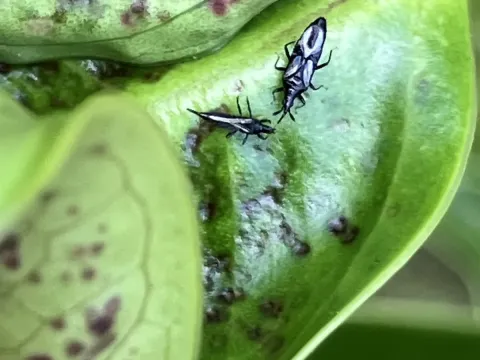
Gynaikothrips
Gynaikothrips
Gynaikothrips (most commonly Gynaikothrips ficorum) is a small insect species belonging to the order Thysanoptera and the family Phlaeothripidae. Adult thrips are typically dark brown or black in color with a slender body, measuring about 2 to 3 mm in length.
What the section contains
Gynaikothrips
The larvae of this species are usually paler, ranging from yellowish to orange, and are highly active. They quickly settle on young, unfolding leaves where they begin their feeding process.
Identification is often difficult without a magnifying lens because these insects prefer the shelter provided by tightly curled leaves. Their presence is almost always marked by the formation of leaf galls.
The life cycle encompasses several stages including eggs, larvae, propupae, pupae, and adults. They thrive in warm, humid environments, which makes them particularly problematic in greenhouses and indoor plant collections.
Due to their elusive nature, infestations are often discovered only after the characteristic physical damage to the plant becomes clearly visible and widespread across the canopy.
The primary host plant for this pest is Ficus microcarpa (Indian laurel fig), though it can affect various other species of the Ficus genus. It is a major issue in commercial nurseries and indoor botanical displays.
Feeding by Gynaikothrips induces the formation of leaf galls. As the insects suck sap from the leaf tissues, the plant responds by twisting and curling the leaf, creating a protective pocket or 'gall' for the insects to live and breed.
Heavy infestations result in severe leaf deformation and stunted growth. The affected leaves lose their aesthetic value, turn chlorotic, and eventually drop off prematurely, weakening the overall structure of the plant.
Aside from direct physiological damage, the feeding wounds create entry points for secondary pathogens, such as fungi or bacteria, which can cause leaf spots and further degrade the health of the plant.
In cases of severe infestation, the cumulative loss of foliage can lead to the decline of the plant, requiring significant recovery time and intensive horticultural care to restore its growth potential.
Effective management starts with the physical removal and destruction of all infested leaves exhibiting galls. This immediate sanitation step is crucial to prevent the spread of the population to healthy shoots.
For greenhouse operations, integrated pest management (IPM) techniques are highly recommended, including the introduction of natural predators such as Orius bugs or predatory mites like Amblyseius species.
When chemical intervention is necessary, systemic insecticides are the most effective choice. These treatments are absorbed by the plant, ensuring that the insects inside the curled leaves are reached and eliminated.
It is essential to apply insecticides in a rotational program to avoid the development of resistance. Regular applications at 7 to 10-day intervals are often required to break the reproductive cycle of the pest.
Maintaining a clean growing environment and utilizing yellow sticky cards for monitoring are effective preventative measures. These tools help detect the presence of winged adults early before they can establish a colony.