
Haplothrips cottei
Haplothrips cottei
Description
How to identify
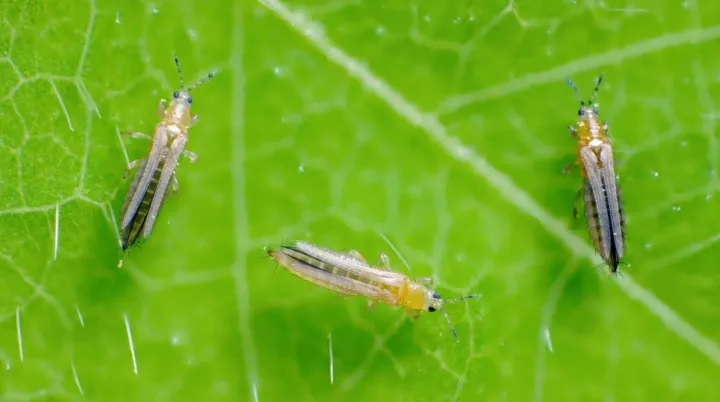
Haplothrips cottei belongs to the order Thysanoptera and the family Phlaeothripidae. These insects are small, typically measuring between 1.5 to 2 mm in length, with a dark brown or black body.
A distinctive feature of this species, common to the Phlaeothripidae family, is the tube-like structure located at the end of the abdomen, which is a key diagnostic character.
The life cycle includes distinct larval stages, where the insects transition from a pale yellow appearance to a reddish or orange hue as they mature before pupation.
Haplothrips cottei is specialized for living within the inflorescences of grasses, making them highly adapted to the internal environment of cereal ears.
Field identification often requires the use of a sweeping net or the physical examination of ears, as the insects typically hide within the glumes to avoid predation and desiccation.
What it damages
The primary hosts of Haplothrips cottei are various cereal crops, including wheat and barley. The pests reside within the spikes and feed on the plant sap.
Adults and larvae congregate under the floral scales, causing significant damage by piercing the plant tissues and extracting nutrients from the developing ovules and grains.
Feeding injury leads to the formation of shriveled grains, significantly reducing the yield and the overall quality of the harvested crop, including grain weight.
The punctures caused by these thrips act as entry points for secondary pathogens, including fungi, which can further degrade the health and quality of the cereal spikes.
The extent of damage is generally higher during periods of high temperature and moisture stress, which weaken the plant defenses against these sap-sucking pests.
When it appears
The pest typically migrates from overwintering sites to cereal fields during the stem elongation and heading phases of the host plants in the spring.
Activity peaks during the flowering and milk-ripening stages of the grains, which coincide with the optimal conditions for larval feeding and rapid population growth.
One generation takes approximately three to four weeks to develop. Depending on regional climatic conditions, multiple generations may occur within a single growing season.
Upon harvesting, the pests migrate to shelters for overwintering, typically residing in crop residues, stubble, or crevices in trees located near field borders.
Spring emergence is closely linked to soil temperature increases and the availability of early-season host grasses, which act as initial breeding grounds.
Signs of infestation
Presence of the pest is indicated by the accumulation of dark excrement spots on the surface of the ears and floral scales, left behind by actively feeding thrips.
Affected plants may show visible signs of premature bleaching of the spikes, often referred to as "white heads," which can be mistaken for other environmental stress factors.
Microscopic examination of the grains often reveals physical deformation, pitting, or surface damage resulting from the repeated feeding activities of the insects.
A decrease in the thousand-grain weight is a critical indicator of economic damage when populations of Haplothrips cottei reach significant densities in a field.
In the field, shaking the cereal heads over a white sheet of paper usually confirms the presence of the pests, as the dark-colored adults become clearly visible.
Control measures
Cultural control strategies include early sowing of cereal crops, which helps the plants reach less vulnerable developmental stages before the peak of pest activity.
Deep autumn plowing is a highly effective practice for burying stubble and crop debris, thereby eliminating the primary overwintering sites for the population.
Maintaining clean field borders by controlling wild grasses minimizes the reservoir of Haplothrips cottei and reduces the risk of infestation in adjacent cultivated areas.
Chemical control measures should be employed based on economic threshold levels, utilizing systemic insecticides during the peak of larval population density.
It is essential to rotate different insecticide classes to prevent the development of resistance within the thrips population and to protect beneficial insect species.
Taxonomy
- Latin name
- Haplothrips cottei
- Order
- Thrips
- Family
- Phlaeothripidae
- EPPO code
- HAPLCO
Discussion
No discussions yet — be the first.