
Ficus thrips
Gynaikothrips uzeli
Description
How to identify
Gynaikothrips uzeli, commonly known as Ficus thrips, is a small insect belonging to the family Phlaeothripidae, order Thysanoptera.
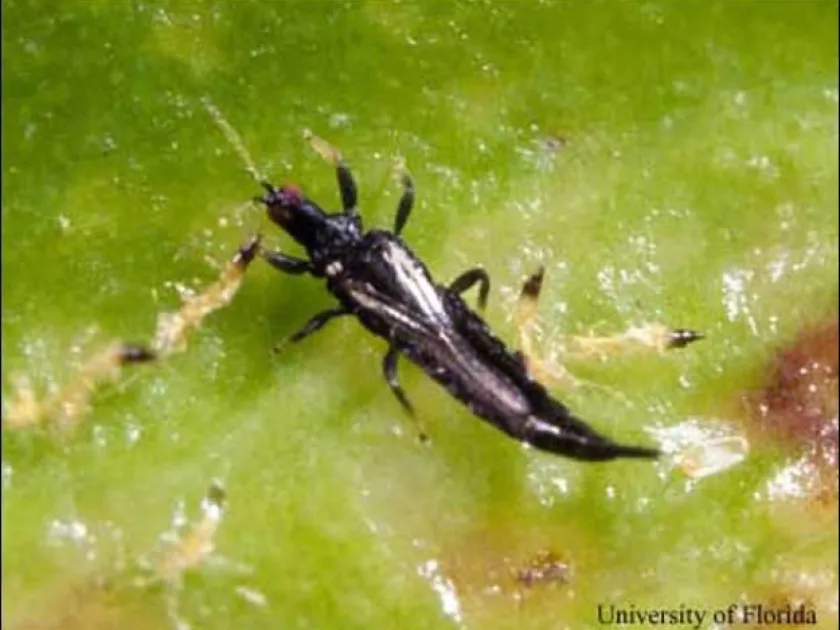
Adult insects are dark brown or black in color and measure approximately 2 to 3 millimeters, making them difficult to spot without close inspection.
The larvae are typically yellow or orange, feeding actively on the underside of young leaves and inside the characteristic leaf rolls they create.
These insects have a high reproductive rate, especially in warm, indoor environments where they can complete their life cycle in just a few weeks.
Due to their size and cryptic behavior, they are often overlooked until the damage to the plant becomes quite noticeable and widespread.
What it damages
This pest is primarily associated with Ficus benjamina, causing significant aesthetic and structural damage to the plant's foliage.
The insects feed by piercing the epidermal cells of young, tender leaves, causing the plant to lose vital nutrients and moisture.
As the insects feed, they inject saliva into the leaf tissue, which triggers the plant to develop abnormal galls or rolls, effectively creating a protective shelter for the colony.
Persistent feeding leads to stunted leaf development, yellowing of the leaf tissue, and premature leaf drop, which can severely weaken the plant.
Without intervention, heavy infestations can cause extensive defoliation, leaving the Ficus bare and highly susceptible to secondary plant diseases.
Signs of infestation
The most diagnostic sign of a Ficus thrips infestation is the inward curling of the leaf margins, creating tight, protective pockets or "galls".
When these leaf rolls are opened, one can observe active adult thrips, larvae, and small, dark fecal spots deposited on the leaf surface.
The affected leaves often show chlorotic spotting and an uneven, distorted texture that significantly detracts from the plant's appearance.
Additionally, a sticky substance may accumulate on the leaves, which frequently leads to the development of black sooty mold.
- Curled leaf margins forming galls.
- Small dark dots (fecal matter) inside leaf rolls.
- Distorted and stunted new growth.
- Yellowing and necrotic spots on foliage.
Control measures
Management starts with the physical removal and disposal of all heavily infested leaves to immediately reduce the pest population density.
Systemic insecticides are the most effective chemical control, as they are absorbed by the plant and target the thrips during their feeding process.
Regular applications may be required to break the life cycle, ensuring that newly hatched larvae are also eliminated before they can cause damage.
Increasing ambient humidity can help deter these pests, as they thrive better in dry, warm environments common in many homes and greenhouses.
Maintaining a proactive monitoring schedule for new, tender growth is essential to catch and control infestations early before they become severe.
Taxonomy
- Latin name
- Gynaikothrips uzeli
- Order
- Thrips
- Family
- Phlaeothripidae
- EPPO code
- GYNAUZ
Discussion
No discussions yet — be the first.