
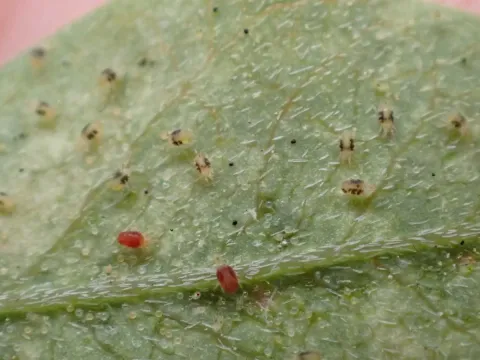
Melon mite
Tetranychus cucurbitacearum
The melon mite (Tetranychus cucurbitacearum) is a significant agricultural pest belonging to the Tetranychidae family. These mites are extremely small, typically measuring less than 0.5 mm in length, making them difficult to detect without a hand lens.
What the section contains
Melon mite
Adult females are generally oval-shaped, varying in color from pale green or yellow to brown. The body is characterized by small setae (hairs) and can be translucent, which helps them blend in with the leaf tissue of their host plants.
The life cycle is rapid and temperature-dependent, consisting of an egg, larva, protonymph, deutonymph, and adult stage. In favorable warm conditions, a full generation can develop in just 7 to 10 days.
Overwintering usually occurs in the adult female stage, hiding in soil debris, leaf litter, or crevices within greenhouse structures. As soon as temperatures rise in the spring, they emerge to infest new plant growth.
Mite populations grow exponentially during hot, dry weather. Wind, machinery, and workers are the primary vectors for spreading the mites between fields or greenhouse bays during the growing season.
The melon mite is a highly polyphagous pest that causes substantial damage to cucurbits, including cucumbers, melons, watermelons, and squash. They are also known to thrive on tomatoes, peppers, and various beans.
Mites feed by piercing plant cells with their stylets and extracting the sap. This destructive feeding behavior causes chlorotic spots to appear on the foliage, eventually leading to reduced photosynthetic capacity.
As the infestation progresses, leaves become mottled, turn yellow or bronze, and eventually desiccate and drop. This loss of foliage reduces the plant's ability to produce high-quality yields, leading to stunted fruit growth.
Severe infestations can lead to the complete death of the plant, especially if the attack occurs during the early vegetative stages. Fruit that does manage to mature may exhibit scarring or poor development.
Furthermore, these mites can facilitate the entry of secondary pathogens into the plant tissues. Some species of spider mites are also known to transmit viral diseases, significantly compounding the damage to crops.
The earliest signs of a melon mite infestation are tiny yellow or white speckles on the undersides of the leaves. These specks result from the destruction of individual plant cells during the feeding process.
A distinctive indicator of spider mite activity is the presence of fine, silken webbing. This web is typically found between the veins of the leaves or across the stems, serving as a shelter for the colony.
Leaves that are heavily infested will start to lose their green color, developing a bleached or bronzed appearance. In advanced stages, the plants may show signs of general wilting despite adequate watering.
Visual inspection with a 10x magnification lens will reveal the presence of mites, their eggs, and cast-off skins (exuviae) attached to the leaf underside. This confirms the presence of an active colony.
In greenhouse environments, look for localized yellowing on plants that spreads in an outward pattern. This patch-like distribution is typical for mite populations, which prioritize healthy tissue until it becomes exhausted.
Effective management begins with strict sanitation practices, including the removal of weeds that act as alternative hosts. Deep plowing of fields after harvest helps reduce the overwintering population.
Maintaining high relative humidity in greenhouses is a key preventive strategy. Spider mites thrive in dry conditions, so misting or humidity control can significantly slow their reproduction rate.
Biological control is highly effective for this pest. The release of predatory mites, such as Phytoseiulus persimilis, can successfully suppress melon mite populations in both greenhouses and high-tunnel systems.
When chemical control is necessary, use specific acaricides that target all mite life stages, including eggs. It is critical to rotate different chemical classes to prevent the development of mite resistance.
- Regular monitoring of crop foliage.
- Introduction of beneficial predatory insects.
- Avoid over-application of broad-spectrum insecticides.
- Thorough cleaning and disinfection of greenhouse structures.