
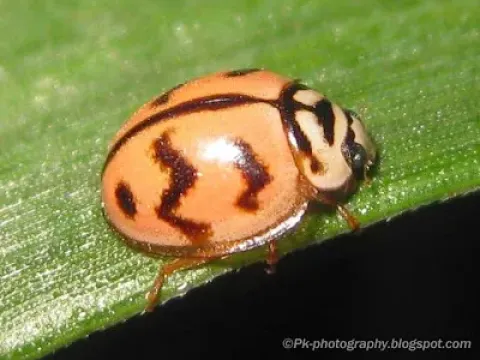
Menochilus sexmaculatus
Menochilus sexmaculatus
Menochilus sexmaculatus, commonly known as the zigzag ladybird, is a species belonging to the Coccinellidae family. While primarily recognized as a beneficial predator of aphids and other small pests, it can occasionally exhibit phytophagous behavior, causing minor damage to crops when preferred prey is scarce.
What the section contains
Menochilus sexmaculatus
The adult beetle typically measures 4–6 mm in length. Its elytra range from orange to red, featuring a distinctive black zigzag pattern or several black spots. The larvae are campodeiform, often dark-colored with lighter, orange or yellow markings on their segments, making them easily identifiable in the field.
The life cycle consists of egg, four larval stages, pupa, and adult. The entire development from egg to adult is rapid, often completed in under a month under warm tropical or subtropical conditions. This high reproductive capacity allows for quick population surges.
Eggs are usually deposited in small clusters on the underside of leaves or stems in close proximity to aphid colonies. Successful development is highly dependent on humidity levels and the availability of abundant prey or suitable plant tissues.
As the species is widely distributed across Asia, its presence in various agro-ecosystems is common. Accurate identification is essential, as confusing this beneficial predator with harmful phytophagous beetles can lead to inappropriate and counterproductive pest control measures.
Direct damage occurs primarily through leaf feeding, resulting in small necrotic spots or surface abrasions on the epidermis. While these injuries are usually superficial, they can become significant if the insect population is very high and the crop is in a sensitive phenological stage.
Targeted crops include various vegetables such as tomatoes, peppers, and eggplants, as well as cotton and cucurbits. Damage is most commonly observed during the vegetative growth phase or when the plant is stressed due to environmental conditions.
Severe infestations can lead to damaged flower buds, affecting fruit set and overall yield quality. In greenhouse settings, the lack of natural enemies may allow this species to increase in number, leading to more visible feeding scars on leaves and stems.
The pest status of Menochilus sexmaculatus is often situational. Because it is fundamentally a predator, its damage to plants is usually a sign of an ecological imbalance or a critical shortage of its traditional insect prey, forcing the beetle to adapt its diet.
Growers should observe plants carefully to determine if the damage is indeed caused by beetles or by other major pests like thrips or mites, which often coexist in the same environment and are more destructive than this ladybird species.
Integrated Pest Management (IPM) is the recommended approach for managing this species. Because it is a significant predator of aphids, prophylactic spraying with broad-spectrum insecticides should be strictly avoided to preserve the biological control agents already present in the field.
Monitoring the population using yellow sticky traps is a highly effective way to track activity levels without causing environmental harm. This method helps farmers differentiate between casual presence and a threatening population density that might require targeted intervention.
Maintaining high plant vigor through proper fertilization and irrigation is crucial. Healthy plants can withstand minor feeding damage without a loss in total yield, reducing the economic necessity of control interventions.
Biological controls, such as using selective microbial-based insecticides or specific fungal pathogens, can be employed if the beetle population exceeds economic thresholds. These methods minimize the impact on non-target species and sustain long-term ecosystem health.
- Avoid broad-spectrum pesticide applications.
- Utilize yellow sticky traps for monitoring.
- Prioritize crop health to increase tolerance.
- Implement selective biological agents when necessary.