
Mesapamea
Mesapamea
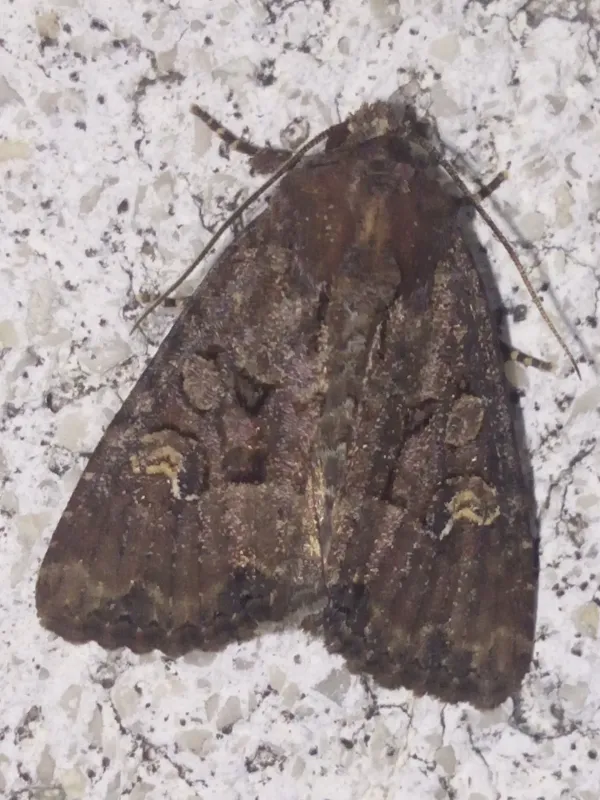
Description
How to identify
Mesapamea is a genus of moths belonging to the Noctuidae family, order Lepidoptera. The adults are medium-sized moths with a wingspan of approximately 30–35 mm, displaying mottled brownish-grey wing patterns that provide camouflage.
The larvae, often referred to as cutworms or stalk-borers, have a cylindrical body typically light grey or pinkish, with a distinct dark stripe along the dorsal side. They possess a well-developed, hard-coated head, enabling them to bore into plant stems.
Eggs are usually deposited by females near the base of host plants or on the soil surface. After hatching, the larvae go through several instars, feeding internally on plant tissues, which makes them particularly difficult to detect in the early stages.
Pupation generally occurs within the soil inside a dense silken cocoon, or occasionally within the damaged stem itself, which provides protection from environmental fluctuations and natural enemies.
Distinguishing specific species within the Mesapamea genus based solely on external characteristics is difficult; therefore, precise identification often requires examining the genitalia of the adult moths.
What it damages
This pest primarily attacks various grasses and cereal crops. Wheat, barley, oats, and certain perennial grasses are among the most frequently reported hosts for these stalk-boring larvae.
The larvae are internal feeders. They bore into the lower part of the stem and consume the pith and vascular tissues, which disrupts the plant's ability to transport water and essential nutrients to the upper parts.
Early-season infestation of the central shoot usually leads to the death of the primary growth point. This often causes excessive tillering, which rarely compensates for the loss of yield potential caused by the initial damage.
Heavy infestations can result in significant stand reduction and reduced grain weight. Severely damaged plants often become brittle at the base and can be easily pulled from the soil due to the destruction of the lower stem structure.
Secondary damage occurs as the feeding tunnels created by the larvae serve as entry points for various fungal and bacterial pathogens, leading to stem rots that further weaken the crop.
When it appears
Adult moths typically emerge in the summer, with the flight period spanning from June to August, depending on local climatic conditions. Females lay eggs that overwinter in either the embryonic stage or as early-instar larvae in the soil.
Active larval feeding begins in early spring, synchronized with the onset of favorable temperatures and the active growth phase of cereal crops. This period represents the highest risk of significant economic damage.
A second period of larval activity can sometimes occur in the autumn if the soil temperature remains warm enough to support development, allowing the larvae to reach a more advanced stage before winter.
The life cycle is closely linked to the phenology of host plants. Infestations are most severe when the larval activity period overlaps with the vegetative stages of the grain crops.
In warmer southern regions, multiple generations may occur within a single growing season, necessitating ongoing vigilance and multiple monitoring cycles throughout the year.
Signs of infestation
One of the first signs of infestation is the yellowing and wilting of the central leaf. A close inspection of the plant base often reveals a small entry hole where the larva has bored into the stem.
Cutting open a suspect stem will usually reveal the larva itself, along with dark, granular excrement (frass) that clogs the tunnel, confirming that the plant has been exploited as a food source.
Small particles of plant debris around the base of the plant, pushed out by the larva during feeding, are another common indicator of internal stem activity.
Patches of premature drying or 'whiteheads' in a field, where the grains fail to fill, can be a symptom of Mesapamea larval feeding that has disrupted nutrient transport to the head.
Agronomists monitor these pests by inspecting representative samples of stems, particularly in fields adjacent to uncultivated land or perennial grass areas that act as natural reservoirs.
Control measures
Agronomic management is the primary defense. This includes deep autumn plowing to disrupt the overwintering pupae and larvae, as well as strict control of grassy weeds that provide alternative hosts.
Crop rotation is essential for population management. Avoiding the planting of cereals immediately following perennial grasses or in fields with a history of high weed pressure reduces the likelihood of severe outbreaks.
Chemical control should only be implemented when economic thresholds are exceeded. Systemic insecticides are required because contact sprays have limited effectiveness against larvae hidden within the plant stems.
Biological control methods, such as the strategic release of Trichogramma wasps, can help manage populations by parasitizing eggs, thereby reducing the number of larvae that emerge to damage the crop.
- Deep autumn tillage to destroy overwintering sites.
- Consistent control of grassy weeds in and around fields.
- Pheromone trap monitoring to track adult moth activity.
- Application of systemic insecticides at threshold levels.
Discussion
No discussions yet — be the first.