
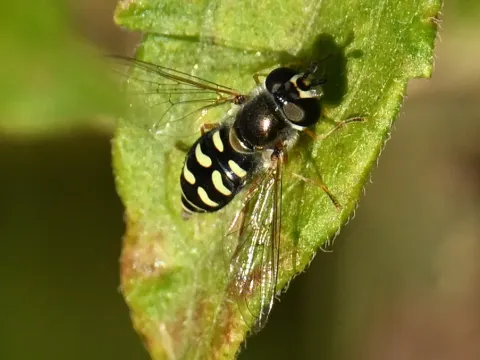
Metasyrphus
Metasyrphus
Metasyrphus is a genus of flies belonging to the Syrphidae family, commonly known as hoverflies or flower flies due to their ability to hover mid-air.
What the section contains
Metasyrphus
Adults exhibit Batesian mimicry, often displaying yellow and black patterns that make them resemble stinging Hymenoptera like bees or wasps.
The larvae are typically legless, slug-like, and range in color from pale green to yellowish-brown, allowing them to blend into aphid colonies.
The life cycle encompasses four distinct stages: egg, larva, pupa, and adult, with the pupal stage often occurring in the soil or on plant debris.
Identifying the genus requires close examination of wing venation and abdominal patterns, which are distinguishing characteristics for professional entomologists.
Unlike true pests, Metasyrphus larvae are predatory and feed heavily on aphids, which are destructive pests for many horticultural and field crops.
They provide essential ecosystem services by naturally reducing aphid outbreaks on fruit trees, vegetable crops, and ornamental plants.
Adults are primarily nectar-feeders, contributing to pollination, which enhances the yield and quality of many flowering agricultural crops.
There is no evidence of Metasyrphus species acting as significant plant pests; their economic value lies in their role as natural biological control agents.
Farmers are encouraged to view these insects as allies rather than threats, as their presence indicates a healthy, balanced agricultural ecosystem.
The activity period starts in early spring, triggered by rising temperatures and the availability of early blooming flowers for the adults.
Peak populations are usually observed during the height of summer, corresponding with the maximum proliferation of aphid populations in the fields.
Multiple generations can occur throughout the growing season, depending on the local climate, humidity levels, and food abundance.
As temperatures drop in the autumn, the final generation pupates to survive the winter, often finding shelter in sheltered organic matter.
The synchronization of the fly's emergence with the aphid's lifecycle is a critical factor for the effectiveness of natural biocontrol in the field.
To support Metasyrphus populations, avoid broad-spectrum insecticide applications that kill both the target pests and their natural predators.
Implementing integrated pest management (IPM) practices is essential for preserving these beneficial insects within the agricultural landscape.
Maintaining flower strips or hedgerows provides necessary pollen and nectar for adults, ensuring they stay in the area to lay eggs.
- Prioritize the use of selective, biorational insecticides when necessary.
- Reduce chemical drift during spraying operations near field borders.
- Promote habitat diversity to provide overwintering sites for beneficials.
Regular monitoring of field conditions allows for informed decisions, preventing unnecessary chemical treatments that disrupt local biodiversity.