
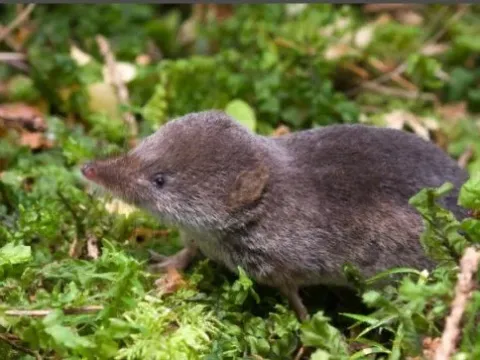
Common shrew
Sorex vulgaris
The common shrew (Sorex araneus) is a small mammal belonging to the family Soricidae. It is often misidentified as a mouse, but it is easily distinguished by its elongated, trunk-like snout and lack of visible ears.
What the section contains
Common shrew
Measuring between 5 and 8 cm in length, these animals have a high metabolic rate, requiring them to consume large quantities of food relative to their body weight every day.
They possess sharp, reddish-brown tipped teeth, which are highly specialized for crushing the exoskeletons of insects and other soil-dwelling invertebrates.
Common shrews are solitary and highly territorial. They prefer moist, covered areas such as dense vegetation, leaf litter, or organic-rich garden soil where they can hunt undisturbed.
Unlike rodents, shrews are strictly insectivorous, which fundamentally changes their relationship with agricultural crops compared to species that consume plant matter.
The common shrew is primarily an insectivore, feeding on earthworms, beetle larvae, spiders, and centipedes. Most of these prey items are considered agricultural pests.
Direct damage to plants is negligible. They do not gnaw on roots, stems, or leaves, but their tunneling activity can sometimes displace soil around the roots of delicate seedlings.
This physical disruption may cause temporary stress to very young plants in greenhouse environments, but it is rarely enough to kill a mature or established crop.
In rare instances, if the insect population is low, they might scavenge on seeds or tubers, but this behavior is not their primary feeding strategy.
In agricultural contexts, they are widely viewed as beneficial predators that help manage populations of wireworms, slugs, and other harmful invertebrates.
Common shrews are active throughout the year, including winter. They do not hibernate and remain mobile under snow cover or within insulating organic matter.
Spring and early summer mark the peak period for reproductive activity. During this time, they become more mobile as they establish territories and raise their litters.
In mid-summer, especially during hot and dry spells, they tend to move towards irrigated or shaded parts of the garden to find shelter and moisture-rich prey.
As autumn approaches, individuals may move toward hedgerows or man-made structures that offer better protection against temperature fluctuations.
Fluctuations in their activity are closely linked to the availability of invertebrate prey, which is influenced by soil moisture and temperature.
The most common sign of shrews is the presence of narrow, shallow tunnels or surface runways, often found under thick mulch or dense vegetation.
Unlike mole hills, shrew tunnels do not leave mounds of excavated soil on the surface. They often use existing crevices or push through loose topsoil.
In greenhouses or garden beds, you may notice slight soil displacement along the roots of plants where the shrew has been hunting for insects.
Small, five-toed footprints may be visible on damp soil, which differ significantly from the tracks left by mice or voles.
A notable decrease in the number of surface-dwelling pests, like slugs or small caterpillars, in a specific area can indicate the presence of a shrew.
Because the common shrew is a beneficial predator of garden pests, active control is generally unnecessary and not recommended for most farmers.
If physical protection of sensitive seedlings is required, burying fine-mesh wire barriers around the base of the crop can prevent soil disturbance.
Maintaining clear garden practices and reducing excessive mulch near sensitive areas can discourage shrews from frequenting those specific spots.
Chemical control (rodenticides) should never be used against shrews, as they are not attracted to grain baits and such poisons pose a severe risk to other wildlife.
Encouraging natural predators such as owls and kestrels can help regulate shrew populations naturally if they become overly dense in a specific area.