
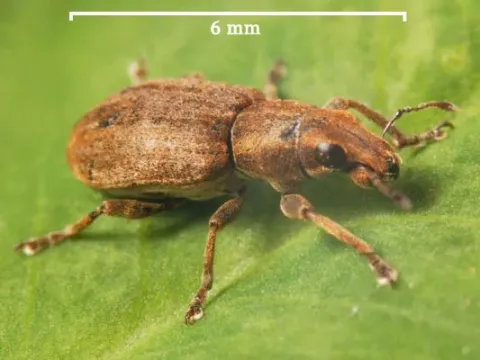
Yellow clover curculio
Sitona flavescens
The yellow clover curculio (Sitona flavescens) is a beetle belonging to the Curculionidae family. Adult beetles typically measure 4–5 mm in length and are distinguished by a short, broad snout, characteristic of the Sitona genus.
What the section contains
Yellow clover curculio
Their body color ranges from yellowish-brown to dark brown, covered with scales that give them a golden appearance. These beetles are capable of flight, allowing them to migrate efficiently between fields in search of suitable legume host plants.
The larvae are white, legless, and fleshy with a brown head. They live exclusively in the soil, where they feed on the root systems of their host plants, specifically targeting the nitrogen-fixing nodules.
Eggs are small, oval, and initially pale, turning darker as they mature. They are usually laid on the plant or directly onto the soil surface, providing larvae with immediate access to food upon hatching.
Pupae are found in the soil within small chambers. This pupal stage typically lasts for several weeks before the emergence of the new adult generation, which will continue the cycle.
Sitona flavescens primarily infests various legume species, including clover (Trifolium), alfalfa, and other forage crops. These plants are essential for soil health and nitrogen fixation, making the damage particularly significant.
Adult beetles cause damage by feeding on the leaves, leaving distinctive semi-circular notches along the edges, known as "notching." While usually not fatal to mature plants, heavy feeding can stunt growth.
The most severe damage is caused by the larvae, which feed on the root nodules. By destroying these nodules, the larvae effectively halt the plant's ability to fix atmospheric nitrogen, leading to stunted development.
This root damage makes plants more susceptible to drought, nutritional deficiencies, and secondary infections by soil-borne pathogens. Severe infestations can lead to substantial yield losses in forage production.
In addition to yield reduction, the pest compromises the longevity of legume stands. As the plants weaken, they are often outcompeted by weeds or susceptible to disease, forcing premature field renovation.
Overwintered adults emerge in early spring as temperatures rise, typically starting around 10–12 °C. They immediately begin feeding on the fresh foliage of young legume seedlings.
Egg-laying occurs throughout the spring and early summer. The larvae hatch and quickly move into the soil, where they remain active throughout the summer months to feed on root systems.
Development from larva to pupa is completed during the summer. By late summer, usually July or August, the new generation of adults emerges and begins a period of active feeding before winter.
This late-summer feeding is crucial for the beetles to build up energy reserves for overwintering. They remain active until autumn temperatures drop, at which point they seek shelter in the soil or crop debris.
While the species generally undergoes one generation per year, environmental variables can impact the timing of developmental stages, requiring growers to monitor fields regularly throughout the growing season.
The most visible sign of an infestation is the notched appearance of leaf margins. Regular scouting for these semi-circular bite marks is a key method for detecting the presence of adult beetles.
Stunted growth, yellowing foliage, and a general lack of vigor in legume stands can indicate subterranean larval damage, especially if other causes of stress have been ruled out.
Examining the root system of symptomatic plants is the only way to confirm larval activity. A reduction in the number of healthy, functional nodules is a clear indicator of Sitona infestation.
In cases of high pest pressure, seedling stands may appear sparse or uneven. Early detection of these signs is vital, as the window for effective chemical control is often limited to the early growth stages.
Soil sampling in the root zone during the larval feeding period can help determine the density of the population and inform management decisions for current and future planting cycles.
Crop rotation and maintaining spatial isolation between new legume fields and older, established stands are the most effective cultural control methods to limit beetle migration.
Tillage practices, such as plowing, can disrupt the soil and destroy larvae and pupae residing in the upper layers, significantly reducing the population for the following season.
Chemical control may be necessary if thresholds are exceeded. Foliar insecticides applied during the peak emergence of adults in the spring are generally the most effective strategy.
- Use of insecticidal seed treatments to protect seedlings during the establishment phase.
- Promoting healthy plant growth through balanced fertilization to help crops withstand damage.
- Encouraging natural predators like predatory beetles and parasitic wasps in the agroecosystem.
Strategic harvesting, such as timely mowing, can also help manage the population by reducing the foliage available for adult feeding and interrupting the life cycle of the pest.