
Yellow-headed Osmylus
Osmylus fulvicephalus
Description
How to identify
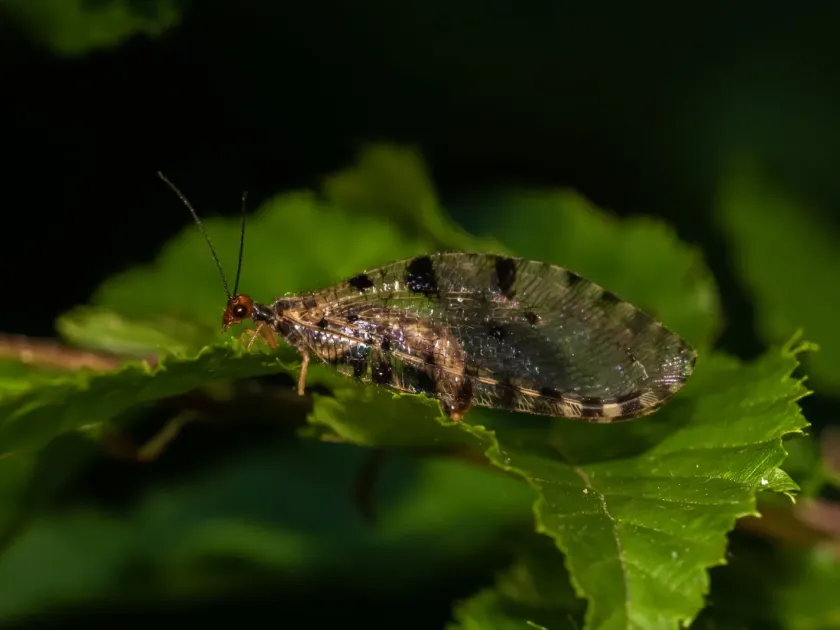
The Yellow-headed Osmylus (Osmylus fulvicephalus) is an insect species belonging to the order Neuroptera and the family Osmylidae. Adults feature a wingspan of 40–50 mm with transparent wings displaying intricate venation.
The insect's body exhibits yellowish-brown coloration, which gives the species its common name. The head is highly mobile and equipped with strong mandibles adapted for a predatory lifestyle.
Larvae are elongated and possess distinct, long, sickle-shaped jaws. These larvae are highly active and typically thrive in damp, shaded environments near water sources.
Unlike other lacewings, the adults of this species are primarily crepuscular or nocturnal, making them elusive to spot during daylight hours.
The species can be distinguished from its relatives by the absence of dark, distinct spots on the wings, maintaining a clearer appearance compared to similar Neuroptera.
What it damages
Biologically, Osmylus fulvicephalus acts primarily as an entomophagous insect rather than a traditional agricultural pest, often helping to regulate other insect populations.
Direct damage to plants is rare and generally only occurs if the larval population density becomes unnaturally high in a confined horticultural area.
In such instances, larvae may cause superficial damage to the root collar or soft shoots of seedlings while searching for smaller prey insects.
The damage manifests as tiny puncture wounds on the surface of young stems, which might potentially serve as entry points for secondary fungal or bacterial pathogens.
Because their impact is negligible, they are rarely classified as major economic pests, and their presence often indicates a healthy, diverse ecosystem.
When it appears
The life cycle commences in late spring as rising temperatures stimulate the larvae to emerge from their overwintering sites in the soil or under tree bark.
Adult flight activity peaks during June and July, coinciding with the mating season and the subsequent deposition of eggs into moist substrates.
Larval development spans throughout the summer, with multiple instars characterized by constant movement and consumption of small soft-bodied prey.
Preparation for winter begins with the onset of autumn chill, as the larvae migrate to protected locations like moss or decaying wood to hibernate.
The species completes one generation per year, with late-instar larvae demonstrating significant resilience to cold temperatures during the winter months.
Signs of infestation
An initial sign of population presence is the attraction of adult insects to artificial light sources, such as garden lanterns, during twilight or night.
Larval activity can be detected by examining the soil surface or the base of young tree trunks in very damp, shaded corners of a garden or nursery.
Characteristic signs include small, localized skin abrasions on the epidermal layer of stems where larvae might have explored or fed.
A secondary indicator is the localized absence of small ground-dwelling pests (such as aphids or mites) that typically serve as the primary food source for Osmylus larvae.
Monitoring the moisture levels in soil substrate is an effective way to gauge the likelihood of larval concentration in specific sectors of a plantation.
Control measures
Direct control measures are rarely needed, as the Yellow-headed Osmylus is generally considered a beneficial predatory insect that assists in ecological balance.
If population numbers must be managed, mechanical removal of excessive moist debris and leaves from the base of young plants is highly recommended.
Avoid the prophylactic use of broad-spectrum chemical insecticides, as these will eliminate beneficial predators and likely cause more harm than good to the garden.
Maintaining proper irrigation and avoiding excessive waterlogging of the soil surface are the most effective agricultural practices to discourage larval buildup.
Biological control alternatives, such as using specific nematodes or entomopathogenic fungi, should only be considered in severe nursery infestations where damage is confirmed.
Discussion
No discussions yet — be the first.