
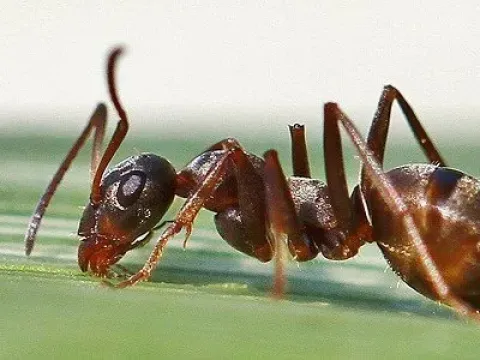
Serviformica ants
Serviformica
The subgenus Serviformica belongs to the family Formicidae and is part of the extensive Formica genus. These are typical forest and garden ants with medium size and colors ranging from brown to black.
What the section contains
Serviformica ants
These insects are characterized by building nests in both soil and wood, often using plant debris to form mounds. They possess a high level of social organization and actively defend their territory.
Unlike other species, ants of this subgenus often create large colonies that can spread over significant areas. Worker ants are highly mobile and exhibit aggressiveness when guarding food sources.
The species can be identified by their characteristic behavior when guarding aphid colonies on tree and shrub branches. They constantly move along trunks, creating well-defined ant trails.
It is important to distinguish these ants from harmful wood-boring species, as Serviformica rarely destroys healthy wood, preferring to use already damaged areas or the soil.
The primary damage caused by Serviformica ants lies in their symbiotic relationship with aphids, scale insects, and psyllids. They act as protectors of these pests against natural enemies like ladybugs and lacewings.
By transporting aphids to young shoots of cultivated plants, ants promote massive garden infestations. As a result, plants lose vital sap, leaves curl, and growth rates slow down significantly.
Furthermore, aphid secretions, known as honeydew, trigger the development of sooty mold, which covers leaf surfaces with a black coating. This disrupts photosynthesis and weakens the plant's immunity.
Ants can also damage seeds during sowing and flower buds while extracting sugary substances. In some cases, their nest activity among perennial roots leads to soil desiccation and mechanical root damage.
- Fruit trees: apple, pear, plum.
- Berry bushes: currant, gooseberry, raspberry.
- Ornamental flowers and young seedlings.
Ant activity begins in early spring as soon as the soil temperature rises above 5-8 degrees Celsius. During this period, overwintered queens begin laying eggs, and worker ants emerge to search for food.
The colony's peak activity occurs in the first half of summer when aphid reproduction is at its maximum. Ants guard their "pastures" most intensely during June and July.
As autumn approaches, ants prepare for hibernation, moving into deeper soil layers or retreating into their long-term nests. The intensity of their surface activity noticeably decreases with the first frosts.
The development cycle includes egg, larva, pupa, and adult stages. The development of a single generation takes from several weeks to a month, allowing the colony to recover its numbers quickly.
The overall population dynamics depend directly on the amount of available food and the presence of favorable nesting sites within the garden.
The primary control measure is to eliminate the ants' food source, which means controlling the aphid population. Using biological and chemical insecticides against aphids significantly reduces the garden's attractiveness to ants.
Effective mechanical barriers include sticky bands applied to the trunks of fruit trees. These prevent worker ants from reaching the canopy, effectively stopping the transport of aphids.
The use of poisoned baits based on slow-acting toxins allows for the destruction of the entire colony, including the queen. It is crucial to place these traps in areas of frequent insect traffic.
Regular soil cultivation in the root zones and destroying nests in spring help reduce the ant population at the start of the season. Repellent scents such as mint, wormwood, or garlic can temporarily limit their activity in specific zones.
In case of massive infestation, specialized gels or granular baits that are safe for pets and beneficial insects should be used according to the manufacturer's instructions.