
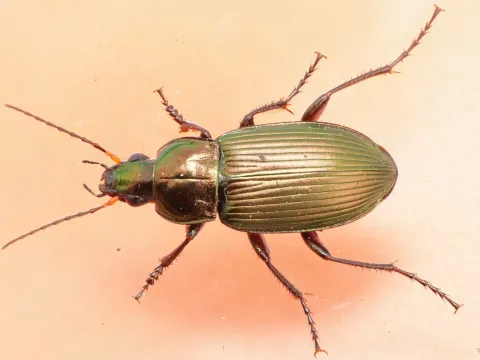
Pterostichus cupreus
Pterostichus cupreus
Pterostichus cupreus is a species of ground beetle belonging to the family Carabidae. Adult beetles are typically 10–14 mm long and feature a distinct metallic, often copper or bronze, sheen on their elytra. Their body is elongated, and they possess robust mandibles adapted for a predatory lifestyle.
What the section contains
Pterostichus cupreus
The larvae are slender and somewhat flattened, with well-developed legs designed for efficient movement within the soil profile. They are usually yellowish-brown and possess sensory organs that help them navigate in the subterranean environment to find prey.
As nocturnal insects, these beetles are most active during the night and dusk. During the day, they remain hidden under crop residues, clods of earth, or within the upper layer of the soil. They are highly mobile and capable of migrating across large agricultural areas in search of optimal conditions.
The life cycle follows complete metamorphosis. Adults typically overwinter in the soil at depths of up to 15 cm. Once spring temperatures arrive, they emerge to feed and begin the reproductive cycle, which is crucial for their survival in agroecosystems.
Although widely regarded as beneficial predators that control other crop pests, they can become facultative phytophages. This behavior occurs when natural prey populations are low, forcing the beetles to feed on soft plant tissues, which classifies them as occasional agricultural pests.
The primary crops affected by Pterostichus cupreus include cereal grains such as winter wheat, rye, and barley. Young seedlings are particularly vulnerable during the early stages of emergence when their tissues are succulent and easily accessible to the beetles.
Maize crops are also at risk. Adult beetles have been observed feeding on seeds directly within the soil, specifically targeting the embryo. This destruction leads to poor stand establishment and noticeable thinning of the crop in the field.
Sugar beet seedlings may also sustain damage during the early vegetative phase. Beetles may gnaw on the stems near the root collar, which can cause the seedlings to collapse, leading to stunted growth or total loss of the young plant.
Damage is often exacerbated during drought conditions. When insects are deprived of their usual prey and water sources, they turn to crop tissues to fulfill their physiological needs, leading to increased pressure on the field crops.
Secondary infections often follow the mechanical damage caused by the beetles. By wounding the stem or root base, the insects create entry points for soil-borne pathogens, further weakening the plant and impacting final yields.
The first indicator of an infestation is an uneven crop stand with patches where seedlings are missing or stunted. A close inspection of the soil around these empty spots often reveals the presence of adult beetles or partially consumed seeds.
Affected seedlings exhibit visible mechanical damage, such as jagged leaf margins or severed stems near the soil surface. Plants often appear wilted or discolored despite no apparent presence of fungal or viral diseases.
Activity can be monitored using pitfall traps set at the ground level. A high capture rate of Pterostichus cupreus in these traps during the seedling stage is a clear sign that the beetle population has reached a level that warrants closer observation or action.
The presence of small, characteristic tunnels in the topsoil, combined with damaged seedlings, provides strong evidence of their activity. It is essential to conduct field assessments during the evening hours to directly observe the beetles in their active state.
Distinguishing this damage from that of wireworms or other root-feeding pests is vital. Confirming the identification of the insect species in the damaged area ensures that the appropriate control measures are implemented.
The most effective management strategy is the use of seed treatments with systemic insecticides. This method protects the vulnerable seedling stage directly and minimizes the need for broadcast insecticide applications across the field.
Proper soil management is critical for prevention. Deep tillage after harvest helps disrupt the beetles' overwintering sites and reduces the overall population density. Maintaining clean fields by eliminating weeds also removes essential shelters and alternative food sources.
Crop rotation serves as a powerful tool to break the life cycle of the beetle. By alternating cereal crops with non-host plants, the accumulation of the pest population in specific fields is significantly suppressed, promoting more stable crop yields.
When monitoring data indicates that the population exceeds the economic threshold, contact-stomach insecticides may be applied. Such treatments are most effective when timed for the evening hours, matching the nocturnal peak activity of the beetles.
- Seed coating with systemic insecticides.
- Deep autumn tillage to destroy overwintering habitats.
- Weed control to eliminate alternative food sources.
- Use of pheromone or pitfall traps for population monitoring.