
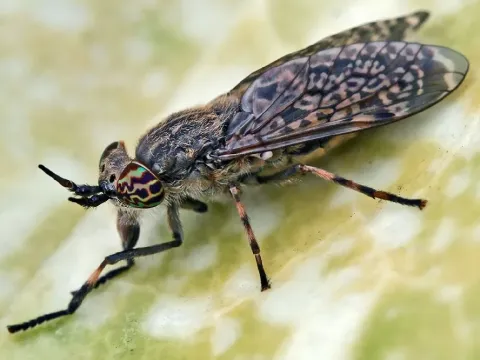
Rain fly
Haematopota
The genus Haematopota, commonly known as rain flies or clegs, belongs to the family Tabanidae. These flies are easily distinguished from other horse flies by their unique mottled, greyish-brown wings that provide excellent camouflage in shaded or grassy areas.
What the section contains
Rain fly
Adult flies possess large, complex eyes, often featuring vibrant, iridescent bands or spots. The antennae are distinctive, usually elongated, which aids in sensory perception during their hunt for hosts.
Females are the ones responsible for biting, as they require a blood meal to develop their eggs. Their mouthparts are equipped with specialized, blade-like structures designed to slice through the skin of mammals.
Males, conversely, feed strictly on floral nectar and pollen. They are harmless to livestock and humans, spending most of their time in vegetation searching for mates.
The larvae are cylindrical, legless, and typically inhabit moist, organic-rich soil found near ponds, marshes, or slow-moving streams, which are essential for their development through several instars.
The primary economic impact of Haematopota lies in the harassment of livestock, including cattle, horses, and sheep. Their aggressive behavior during feeding causes immense stress to grazing animals.
Constant biting and buzzing disrupt the normal grazing patterns of herds. Animals become agitated, leading to significant energy expenditure, reduced time spent eating, and consequently, lower milk yields and poor weight gain.
Beyond physical irritation, these flies act as vectors for various pathogens. They can transmit bacteria and viruses between animals, potentially causing outbreaks of diseases that necessitate expensive veterinary interventions.
The bite wounds themselves are painful and prone to secondary infections. If left untreated, these wounds can lead to localized dermatitis or attract other pests, such as flies that lay eggs in the lesions.
In regions with high populations, these flies can cause significant financial losses to farmers due to reduced meat quality, lower productivity, and the increased cost of protective veterinary supplies.
Rain flies are highly dependent on environmental conditions. They are most active during the warmest months of the year, typically appearing from early June through August, depending on the latitude.
The name "rain fly" refers to their tendency to be most active in humid, overcast, or sultry weather, particularly right before a storm when barometric pressure drops and air remains still.
The life cycle is complete and usually spans one year. They overwinter as larvae in the soil, which makes them resilient to cold winters and allows for a rapid emergence as temperatures rise in the spring.
Peak activity occurs during the middle of the day in calm weather. They are notably persistent and will follow moving targets, such as grazing animals, over long distances to secure a blood meal.
The emergence of adults is synchronized with the availability of hosts and optimal soil moisture levels, ensuring that the next generation has sufficient resources for successful reproduction.
Visible distress in livestock is the first indicator of a rain fly infestation. Animals often twitch their skin, swat their tails continuously, and may run or head toward water bodies to submerge themselves and escape the bites.
Upon physical examination, small, bleeding puncture wounds can be observed on the legs, belly, and back of the animals. These areas are often swollen and tender to the touch.
Observers may see the flies sitting on the animal's coat. They are distinct because they are relatively quiet compared to other flies and are remarkably persistent, often remaining on the host even when swatted.
A sudden decline in overall herd performance, such as reduced grazing efficiency or agitation during previously peaceful hours, often correlates with high fly density in the surrounding pastures.
Humans in the area will notice the flies attempting to land on them, typically targeting exposed skin or dark-colored clothing, which provides another early warning sign of their presence.
Effective management includes the use of synthetic pyrethroid insecticides, applied via sprays, pour-ons, or ear tags, which provide a protective barrier on the animal’s skin against bites.
Pasture management is crucial; this involves removing thick, overhanging vegetation near water sources and maintaining clean fields to discourage the breeding of larvae in damp soil.
Utilizing specialized fly traps that mimic host heat and silhouettes can significantly reduce the local population of females within a grazing area if placed strategically during the peak season.
During extreme fly activity, it is recommended to house cattle in dark, well-ventilated barns or provide them with access to sheds where the flies are less likely to follow.
- Regular application of approved livestock repellents.
- Strategic grazing timing (early morning or late evening).
- Installation of silhouette-based fly traps on pastures.