
Pselliopus barberi
Pselliopus barberi
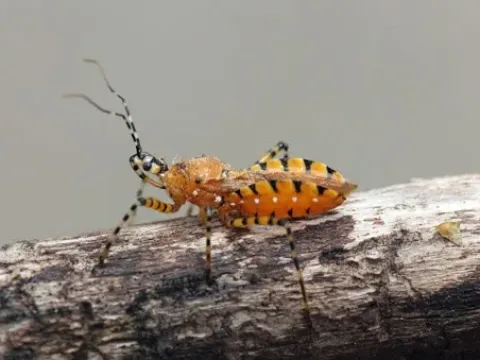
Pselliopus barberi is a member of the Reduviidae family, commonly known as assassin bugs. These insects are characterized by their striking orange-yellow coloration with dark markings and elongated limbs, which facilitate agile movement across vegetation.
What the section contains
Pselliopus barberi
While often categorized as pests, these insects primarily function as predators. Their status in the agroecosystem is complex, as they play a dual role in suppressing populations of herbivorous insects while occasionally causing minor damage to plants.
The adult insect is identified by its narrow head and specialized rostrum used for piercing prey. Mature individuals typically measure between 10 and 12 millimeters in length.
Nymphs undergo several developmental stages, gradually resembling the adult form. During their early development, they are elusive, preferring to stay hidden within dense foliage to ambush small insects.
Accurate identification requires professional inspection, as many species within the Reduviidae family share similar morphological features, such as the specific patterns on the pronotum.
Damage caused by Pselliopus barberi is primarily incidental. When their standard prey—such as aphids—is scarce, they may probe plant tissues with their mouthparts, resulting in minor localized injuries.
Crops most frequently visited by these insects include ornamental shrubs and vegetable crops that host high populations of aphids, which serve as the primary attraction for the bugs.
Although they are not specialized plant feeders, high densities of these insects can lead to necrotic spots on young shoots. This happens because the insect's saliva may cause a mild toxic reaction in plant tissues.
Economic damage is typically negligible unless the population density becomes excessively high, which can cause visible physiological stress on young, tender plants.
Caution should be exercised during agricultural tasks, as these bugs can deliver a painful bite to humans if handled directly, which can cause localized swelling and discomfort.
The activity of Pselliopus barberi begins in late spring as temperatures rise. Overwintering adults emerge from their dormant state to seek mates and begin the first generation of the season.
Population peaks usually occur during mid-to-late summer, coinciding with the highest density of prey insects in gardens and agricultural fields.
The lifecycle consists of one or two generations per year depending on the regional climate. As temperatures drop in autumn, the insects retreat into diapause to survive the winter.
Ideal overwintering sites include leaf litter, deep mulch, or crevices in tree bark, where the bugs wait for the return of warmer conditions.
Effective monitoring should commence in early June, with a focus on inspecting the undersides of leaves and stem nodes where nymphs often congregate.
The most immediate indicator of their presence is the visual detection of the adults on the plant stems. Their vibrant warning colors make them relatively easy to spot during routine garden inspections.
Signs of feeding activity appear as minute, pinpoint punctures on leaves or young shoots, which may later turn brown or show signs of localized drying due to tissue death.
Finding empty exoskeletons of aphids near areas where these bugs are present is a strong sign of their predatory activity, as they leave the hollow shells of their prey behind.
Deformation of young leaves or stunted shoot tips can occur if a plant has been subjected to repeated piercing, often leading observers to misidentify the cause as a fungal pathogen.
- Observation of orange, long-legged bugs on vegetation.
- Small brown necrotic spots on leaf surfaces.
- Noticeable reduction in local aphid colonies.
Specific management measures for Pselliopus barberi are rarely necessary, as they do not typically reach levels that threaten agricultural production.
Cultural practices, such as maintaining weed-free areas and thinning dense foliage, are sufficient to limit their local population by removing the microhabitats they prefer.
Chemical control should be avoided as a primary strategy, as broad-spectrum insecticides will also eliminate beneficial predator populations that naturally regulate the ecosystem.
Biological control methods, including attracting natural predators and maintaining healthy garden biodiversity, provide the most sustainable management solution.
Manual removal of insects is recommended for small gardens; however, it is essential to wear protective gloves to avoid bites while performing these tasks.