
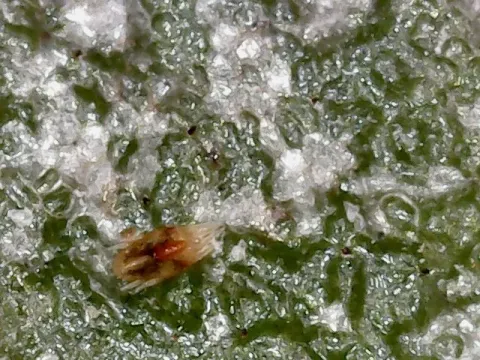
Flat mite
Platytetranychus
The flat mite, belonging to the family Tenuipalpidae (also known as false spider mites), is a tiny arthropod pest. Unlike the common spider mite, these pests have an extremely flattened body, allowing them to hide effectively in bark crevices, bud scales, and other narrow plant structures.
What the section contains
Flat mite
Adult mites are microscopic, typically measuring less than 0.3 millimeters in length. Their coloration ranges from pale yellow to reddish-brown, often matching the color of the plant tissue they infest, which makes visual detection very difficult for the naked eye.
The life cycle of the flat mite consists of the egg, larva, protonymph, deutonymph, and adult stages. Under warm and dry conditions, the development of a full generation can occur in less than two weeks, allowing for rapid population growth during the growing season.
One of the key differences between flat mites and Tetranychidae is that they do not produce any visible webbing on the foliage. This absence of silk makes them particularly insidious, as their presence often goes unnoticed until significant plant damage has already occurred.
Systematically, they are part of the order Trombidiformes. Their survival strategy relies on high adaptability to the micro-environments within the canopy of trees and shrubs, where they remain protected from harsh weather and many generalist predators.
Flat mites infest a wide range of plants, including fruit trees like apples and pears, citrus, grapevines, and various ornamental shrubs. They feed by piercing the plant epidermis and sucking sap from the underlying tissues, causing direct metabolic stress.
Damage typically manifests as necrotic spotting on leaves, followed by curling, deformation, and premature senescence. As the mites concentrate their feeding on young growth, they can severely stunt the development of new leaves and shoots.
Young plants and newly grafted cultivars are at the highest risk. The destruction of bud tissues can lead to reduced vigor, poor branching, and an overall susceptibility to secondary opportunistic infections such as fungi or bacterial pathogens.
On developing fruits, the feeding activity can cause a condition known as russeting or corking. This scarring of the skin drastically reduces the aesthetic and commercial value of the harvest, making the produce less attractive to consumers.
The economic impact of these mites is significant because they often go undetected for long periods. Their chronic feeding causes a gradual decline in tree health, reducing winter hardiness and decreasing the total yield over successive years.
The activity of flat mites usually begins in early spring, once the average daily temperatures rise above 10-12 degrees Celsius. The overwintering females emerge from their shelters on the bark and start colonizing the newly budding leaves.
Summer is the peak season for population expansion. Hot and dry weather is highly favorable for their development, leading to overlapping generations and a rapid increase in the number of mites per leaf surface.
As the weather cools down in autumn, the mites prepare for dormancy. The females seek out protected locations, such as deep cracks in the tree bark, under leaf litter, or in debris near the base of the plant, to survive the winter.
In greenhouses and indoor environments, the life cycle may continue throughout the year if the temperature is kept stable. This creates a risk of continuous infestations, as there is no natural seasonal break to reduce the population numbers.
Monitoring should start as soon as bud break occurs. Regular scouting, focusing on the undersides of leaves and using a 10x magnification hand lens, is the most effective way to detect the start of an infestation before it spreads.
The initial signs of an infestation include small, light-colored stippling or marble-like patterns on the foliage. The leaves may lose their natural luster and begin to appear dull or grayish as the chlorophyll is depleted.
As the infestation progresses, leaves may curl or deform, and in severe cases, premature leaf drop occurs. The growth of new shoots is noticeably stunted, and the plant overall may appear weak and lackluster despite adequate irrigation.
Russeting or rough, cork-like patches on fruit skin are a clear indicator of heavy flat mite activity. This damage is caused by the physical destruction of the fruit epidermis during the early stages of fruit expansion.
Tiny white eggshells left behind on the underside of leaves serve as a diagnostic sign. These shells look like fine white dust to the untrained eye but indicate that the population is actively breeding on that specific plant tissue.
Because they do not build webs, diagnosing flat mites can be challenging. If a plant shows symptoms of decline that do not respond to standard fungicide treatments for leaf spots, a closer inspection for these hidden mites is highly recommended.
Effective management requires the use of specific acaricides that target mites without harming beneficial insects. It is crucial to rotate between different chemical classes to prevent the development of pesticide resistance in the mite population.
Biological control methods involve the introduction of predatory mites, such as Amblyseius species. These natural enemies can be very effective in managing flat mite populations, especially in controlled environments like greenhouses.
Good agricultural practices, such as removing old, rough bark from tree trunks and clearing out plant debris, can significantly reduce the number of suitable overwintering sites for the mites, lowering the initial population pressure in spring.
Ensuring optimal plant health through balanced fertilization and correct irrigation is essential. Plants that are not under stress are generally more capable of withstanding mite feeding without suffering significant damage.
When applying control products, it is vital to ensure complete coverage, especially the undersides of the leaves. Using wetting agents (adjuvants) helps the solution penetrate into cracks and crevices, significantly increasing the effectiveness of the treatment.