
Flesh fly
Sarcophaga falculata
Description
How to identify
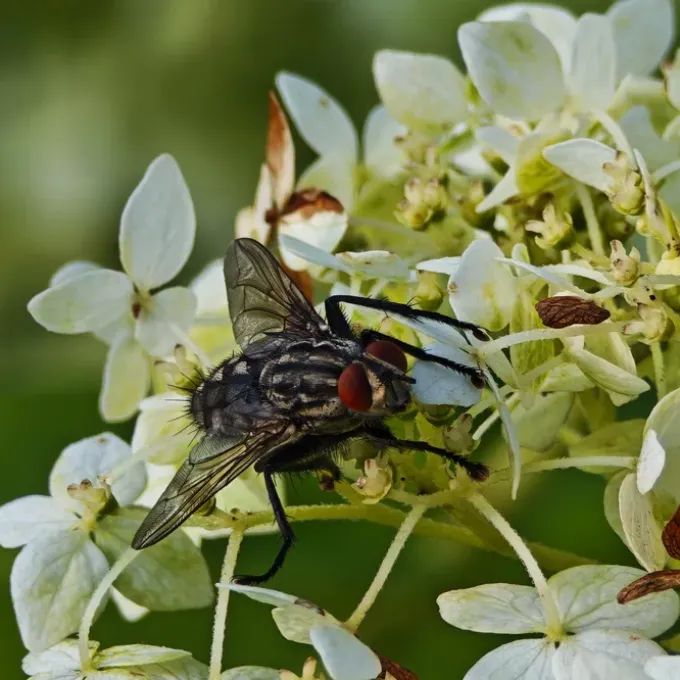
The flesh fly, scientifically known as Sarcophaga falculata, belongs to the family Sarcophagidae within the order Diptera. These flies are easily recognized by their ash-gray body color, distinct longitudinal dark stripes on the thorax, and a checkered pattern on the abdomen.
Adult flies are medium to large in size, covered with stiff bristles. Their large, reddish eyes are well-developed, allowing them to effectively scan environments for suitable breeding grounds or food sources.
A key biological characteristic of this species is larviparity. Unlike many other flies that lay eggs, these flies deposit live, active larvae directly onto a food source, ensuring their rapid colonization of organic materials.
The larvae are cylindrical and lack a distinct head, possessing robust mouthparts that enable them to digest decaying organic matter quickly. This efficiency in consumption is a hallmark of the Sarcophagidae family.
Professional identification usually requires checking the morphology of the male genitalia, as many species within the genus Sarcophaga appear nearly identical to the naked eye.
What it damages
While flesh flies primarily function as saprophages, feeding on decomposing organic matter, they can cause significant agricultural issues by acting as vectors for plant pathogens and contaminating harvests.
The primary concern is the mechanical transfer of bacteria, viruses, and fungal spores. By landing on decaying plant debris, the flies can transport these pathogens to healthy fruit, initiating secondary infections such as soft rot.
In greenhouses and storage facilities, they are attracted to damaged or rotting vegetables. The larvae can infest these tissues, accelerating the decomposition process and rendering the produce unmarketable.
The presence of larvae in produce creates a hygiene hazard, leading to quality loss and a significant reduction in the shelf life of crops like tomatoes, peppers, and various leafy vegetables.
Overall economic damage is tied to sanitary failures. The presence of these flies often signals an underlying issue with crop residue management or a lack of proper sanitation in storage areas.
When it appears
Flesh fly activity peaks during the warmer months, typically from late spring through early autumn. July and August are often the most active periods when high temperatures optimize their breeding cycles.
The life cycle of Sarcophaga falculata is temperature-dependent. Higher temperatures significantly shorten the developmental time of each generation, allowing for multiple overlapping cycles within a single growing season.
As temperatures drop in late autumn, the activity of the adults declines. The species typically overwinters in a state of diapause, hiding in the soil or protected organic debris until conditions become favorable again.
Monitoring for adult activity begins as soon as soil temperatures rise in the spring. Tracking these movements is crucial for implementing proactive control measures before the population reaches critical levels.
Environmental conditions, particularly moisture levels in organic matter, also dictate where and when these flies will concentrate, making site hygiene a primary determinant of their seasonal presence.
Signs of infestation
The presence of flesh flies is often indicated by the constant buzzing of adults around organic waste, compost piles, or damaged fruit in the field.
One of the most obvious signs of infestation is the rapid softening and darkening of vegetable tissues, often accompanied by an unpleasant, pungent odor characteristic of putrefaction.
- Visible presence of mobile larvae within soft, decaying plant tissues.
- Wet, dark, and sunken lesions on the surface of fruits or vegetables.
- A foul, distinctively pungent odor emanating from infested crops.
- Presence of small fly feces on leaves near decomposing materials.
Inspecting produce for these signs during harvest is vital to prevent "hidden" larvae from entering storage rooms, where they could infest larger batches of healthy produce.
Early intervention is necessary, as once larvae are embedded deep within the fruit, control becomes significantly more difficult and typically requires the disposal of the affected produce.
Control measures
The most effective management strategy is strict field and facility sanitation. Removing rotting vegetation, fallen fruit, and organic waste promptly is the best way to deny the flies suitable breeding sites.
Physical barriers, such as fine-mesh screening on greenhouse vents and doors, are highly effective at preventing adult flies from entering areas where produce is being grown or stored.
Trapping adults using food-based lures (containing fermenting proteins or carbohydrates) can help keep populations suppressed, though this is primarily useful for monitoring and small-scale suppression.
Chemical control is rarely the first line of defense due to the flies' high capacity for developing insecticide resistance and the strict regulations regarding chemical residues on edible vegetables.
Cultural practices, such as deep plowing and incorporating crop residues into the soil, are highly recommended to disrupt the life cycle of the larvae and pupae residing in the upper layers of the earth.
Discussion
No discussions yet — be the first.