
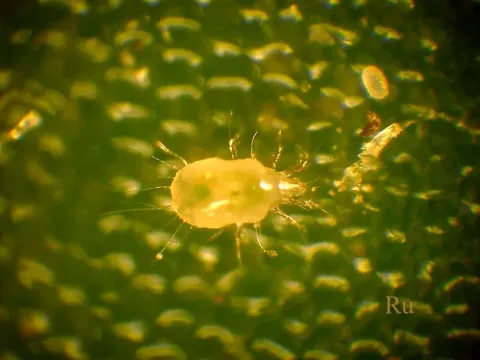
Flour mite
Tyrophagus dimidiatus
The flour mite (Tyrophagus dimidiatus) is a microscopic arachnid belonging to the Acaridae family, order Acariformes. It is a major pest of stored products worldwide.
What the section contains
Flour mite
Adult mites measure approximately 0.3–0.5 mm in length. Their bodies are translucent, pale, or whitish, often with long, visible bristles that help them navigate through grain bulk.
The lifecycle is rapid under optimal conditions (relative humidity > 14% and temperatures around 20–25°C), where a full generation can be completed in just 10 to 14 days.
This species is capable of entering a specialized developmental stage known as a hypopus, a resistant resting phase that allows the mite to survive harsh environments for extended periods.
Due to their size, identification usually requires a magnifying lens or a stereomicroscope to distinguish them from other stored-product mites in laboratory samples.
Flour mites primarily infest stored cereals, including wheat, rye, barley, and oats, but they also attack pulses, oilseeds, flour, dry fruits, and animal feed.
The primary target of the mite is the germ of the seed. By consuming the germ, they directly destroy the viability and germination potential of the grain.
Beyond direct feeding, these mites contribute to the deterioration of grain quality by increasing moisture content through respiration, which facilitates mold growth.
The presence of mites often leads to the development of mycotoxins produced by the fungi they introduce into the grain mass, rendering the product hazardous.
Severe infestations result in massive amounts of mite debris, cast skins, and waste products, causing the grain to clump together and develop a distinct pungent odor.
A strong, sweet, or musty smell emanating from grain storage facilities is often the first indicator of a heavy flour mite infestation.
A grayish, dusty layer on the surface of the grain pile, caused by the accumulation of millions of mites and their cast-off exoskeletons, is a common visual sign.
Examination of individual grains reveals hollowed-out embryos, indicating that the mites have been feeding on the most nutrient-rich part of the seed.
Localized heating (self-heating) of the grain bulk is a physical symptom of high mite activity, which can lead to further spoilage and loss of volume.
Skin irritation and respiratory symptoms among workers handling the infested grain serve as a warning sign of high mite density within the storage area.
Managing moisture is the most effective cultural control method. Keeping grain moisture content below 13% prevents flour mites from developing and reproducing.
Rigorous sanitation of storage facilities, including the removal of residual grain, dust, and debris, is essential to prevent carryover infestations between seasons.
Chemical control, specifically fumigation with phosphine-based products, is the industry standard for eradicating established infestations in bulk grain storage.
Aeration systems should be used to maintain low temperatures within the storage silos, which significantly slows down the mite's metabolic rate and reproductive cycles.
- Regular inspection of stored commodities for mites.
- Application of contact insecticides for empty bin treatments.
- Use of hermetic storage bags for small-scale seed protection.
- Monitoring grain temperatures periodically.