
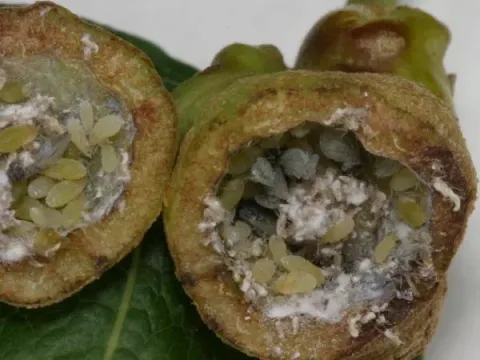
Poplar gall aphid
Pemphigus populivenae
The Poplar gall aphid (Pemphigus populivenae) is a specialized insect from the Pemphigidae family. It is known for creating distinct, tumor-like galls on the leaves of poplar trees.
What the section contains
Poplar gall aphid
The life cycle involves an alternation of hosts and generations, which is a characteristic feature of this species. These insects are highly adapted to their specific microhabitat within the plant tissue.
Adult aphids are relatively small and often covered in a waxy secretion. This substance acts as a protective layer against environmental stress and predators.
Systematic classification places this species within the order Hemiptera. Their evolutionary success is linked to their ability to manipulate plant growth to create a safe shelter.
Field identification is performed by examining the morphology of the galls, as the aphids themselves spend most of their life cycle hidden from view.
The primary host for this pest is the poplar tree (genus Populus). The damage is caused by the feeding of larvae inside the leaf tissues.
By injecting enzymes while feeding, the aphids force the tree to produce galls. This disrupts the normal transport of nutrients and water throughout the leaf blade.
Severe infestations can lead to premature leaf drop and overall stress for the tree. This reduces the tree's vigor and makes it more susceptible to other diseases.
In landscaping and forestry, the aesthetic value of the trees is compromised due to the unsightly deformed leaves and stunted growth patterns.
Young trees are particularly vulnerable, as significant leaf damage can impact their growth rate and overall development during the critical early years.
The life cycle starts in early spring when overwintering eggs hatch on the tree bark. The larvae then move to the developing buds to begin colonization.
Gall formation occurs from late spring to early summer. During this time, the aphid colony grows rapidly within the protected environment of the gall.
By mid-summer, winged aphids emerge and migrate to secondary hosts or different parts of the tree to continue their reproduction cycle.
Autumn is the period for egg-laying. The eggs are deposited in crevices on the bark, where they remain dormant throughout the winter season.
Climatic conditions in the spring, specifically temperature and humidity, are crucial factors that determine the success of the new generation.
The most prominent sign of infestation is the appearance of galls. These are usually found along the midrib of the leaf or near the petiole base.
The galls are characterized by their tumor-like shape and smooth surface. Their color may vary, typically ranging from light green to reddish-brown.
Leaves affected by the aphids often show significant distortion, curling, or yellowing. The foliage may appear malformed and lose its functional efficiency.
White, fluffy waxy residues might be visible near the base of the leaves, indicating active aphid presence within the plant tissues.
A heavily infested tree will show signs of thinning, with a noticeably sparse canopy and potentially dry, brittle branches appearing in the late summer.
Integrated pest management in nurseries involves the sanitation of fallen leaves to remove potential egg-laying sites and reduce the pest population for the next year.
Chemical control should be applied during the early stage of larval emergence before the galls become fully formed and provide protection to the aphids.
Systemic insecticides are the most effective when applied at the appropriate time in spring, ensuring the chemical reaches the target tissue before the infestation peaks.
- Regular monitoring of tree health in spring.
- Encouraging natural predators such as lady beetles and lacewings.
- Selecting resistant poplar clones for new urban plantings.
Effective management requires early detection. If a tree is lightly infested, manual pruning of affected leaves can help limit the spread of the colony.