
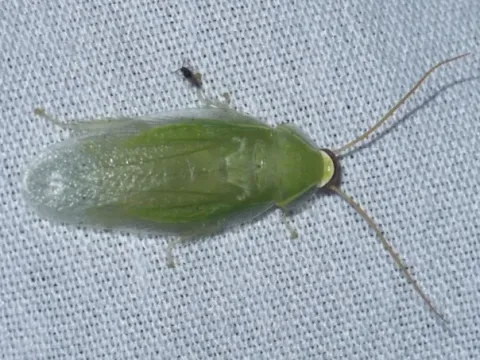
Cuban cockroach
Panchlora cubensis
The Cuban cockroach (Panchlora cubensis) belongs to the order Blattodea and the family Blaberidae. Adults are easily recognized by their vibrant pale green to yellowish-green color, which serves as camouflage within lush tropical vegetation.
What the section contains
Cuban cockroach
Adults typically measure between 15 and 25 millimeters in length. Females are generally larger than males. Nymphs have a darker, brownish appearance, allowing them to remain concealed within soil or decaying organic matter.
This species is native to tropical regions but has become a frequent resident in greenhouses and botanical gardens worldwide. They are strictly nocturnal, preferring warm and humid environments where they can thrive undisturbed.
Unlike many other cockroach species, they are not primarily attracted to human food waste, preferring fresh plant tissue. Their presence in greenhouses is often linked to the importation of tropical plants.
Reproduction is viviparous, with females carrying oothecae internally. This biological advantage allows them to colonize new areas rapidly if environmental conditions, such as high humidity and stable temperatures, are met.
The Cuban cockroach is a generalist herbivore capable of damaging a wide variety of indoor, tropical, and decorative plants. They feed primarily on the soft foliage of ornamental species and seedlings.
They consume leaf tissue, creating irregular, unsightly holes that compromise the aesthetic value of ornamental plants. In cases of high infestation, they can skeletonize leaves, severely impacting the plant's photosynthetic efficiency.
Nymphs often feed on the lower parts of plants or succulent stems near the soil surface. This feeding behavior can introduce fungal pathogens into the plant tissues, leading to rot and secondary infections that kill young plants.
Their excrement, deposited on the foliage, often acts as a substrate for sooty mold. This dark, fungal growth further inhibits photosynthesis and makes the plants look dirty and sickly.
For nurseries and commercial floriculture operations, the presence of these cockroaches results in significant economic loss, as damaged plants lose their marketability and quality.
The most common sign of a Cuban cockroach infestation is the presence of irregular bite marks on leaves. These marks are often mistaken for damage caused by slugs or caterpillars, but the absence of slime trails is a key differentiator.
Small, dark, pellet-like droppings found in leaf axils or on the soil surface are clear indicators of their activity. Additionally, you may find discarded exoskeletons, which signify that nymphs have been molting in the vicinity.
A nighttime survey with a flashlight often reveals the adults. Because they are highly reactive to movement and light, you will likely see them scurrying toward shelter the moment they are illuminated.
Visible decline in plant vigor, especially in seedlings, combined with localized necrosis or "nibbled" leaf margins, should prompt a thorough inspection for this pest.
In humid greenhouses, these cockroaches often congregate in damp, dark corners or under pots, making these locations primary targets for monitoring activities.
Sanitation is the most effective cultural control method. Removing dead plant matter, leaf litter, and debris eliminates the food sources and hiding spots that these insects depend on.
Sticky traps placed strategically around the greenhouse or indoor collection help in monitoring populations and reducing the number of active adults.
Chemical control can be achieved through the use of contact insecticides. It is critical to apply these products in the evening, aligning with the nocturnal behavior of the cockroaches, to ensure maximum efficacy.
Biological control using entomopathogenic nematodes applied to the soil can successfully target the nymph stage, reducing the overall population without the need for harsh chemicals.
- Regular inspection of incoming plants;
- Maintaining low humidity where possible;
- Using natural predators or safe chemical interventions.