
Cucumber gall midge
Phaenobremia cucumeris
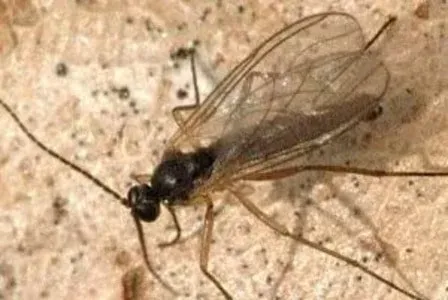
Description
How to identify
The cucumber gall midge (Phaenobremia cucumeris, often classified as Aphidoletes cucumeris) is a member of the Cecidomyiidae family, order Diptera.
Adults are tiny, delicate midges with long legs and antennae, measuring approximately 1.5 to 2 mm in length, making them difficult to spot without close inspection.
The larvae are bright orange or reddish, spindle-shaped, and reach about 2.5 mm in length. They are highly active and mobile, which helps them locate aphid colonies.
The life cycle consists of egg, larva, pupa, and adult stages. They typically overwinter as pupae in the soil, protected by a cocoon, emerging as adults in the spring.
It is crucial to recognize that this species is not a plant pest, but a valuable beneficial predator used in biological control programs worldwide.
What it damages
The cucumber gall midge causes no harm to crops; its larvae are specialized predators that feed exclusively on aphids (Aphididae).
They commonly prey on melon aphids, potato aphids, and other species that infest cucurbit crops such as cucumbers, squashes, and pumpkins.
Adult midges do not feed on plant tissues at all, as their mouthparts are vestigial, focusing only on reproduction.
Larvae hunt by piercing the aphid's cuticle and consuming its contents, effectively neutralizing the aphid population within a colony in a very short time.
By preventing aphid outbreaks, this insect provides an immense service to greenhouse and field vegetable production.
Signs of infestation
The most reliable sign of the midge's presence is observing small, vibrant orange larvae moving within aphid clusters on the underside of leaves.
A reduction in aphid numbers without the presence of chemical insecticides often indicates that natural predators, such as the gall midge, are at work.
Adults can be detected using yellow sticky traps, which are standard equipment for monitoring insect activity in greenhouse environments.
Large patches of empty aphid skins or diminished aphid colonies are clear indicators of successful predatory activity by the midge larvae.
Regular scouting of the lower canopy of cucumber plants is the best way to verify the establishment of this biological control agent.
Control measures
Since the cucumber gall midge is a beneficial predator, the main control strategy is conservation and augmentation rather than eradication.
Farmers should avoid broad-spectrum insecticides that are toxic to beneficial insects, as these disrupt the natural balance and lead to secondary outbreaks.
Integrated Pest Management (IPM) practices recommend releasing laboratory-reared midges when aphid populations reach specific economic thresholds.
If chemical intervention for other pests is necessary, growers should select selective pesticides that are compatible with integrated biological control.
- Minimize the use of non-selective pesticides.
- Introduce biological controls as part of an IPM program.
- Use yellow sticky cards for monitoring.
- Provide refuge for beneficial insects in field margins.
Discussion
No discussions yet — be the first.