
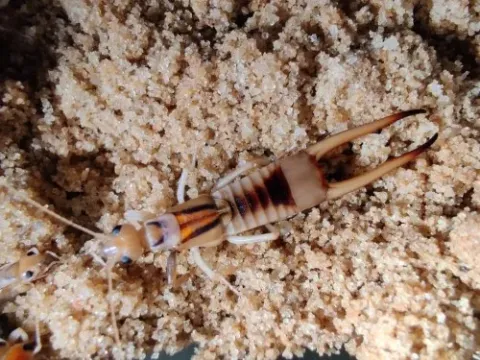
Bates earwig
Labidura batesi
The Bates earwig (Labidura batesi) is a member of the order Dermaptera and the family Labiduridae. It is characterized by an elongated body and a pair of prominent, forcep-like appendages called cerci located at the end of the abdomen, which are more curved and developed in males.
What the section contains
Bates earwig
Adults typically display a dark brown to black coloration, providing excellent camouflage within soil debris and dense vegetation. They reach an average length of 15–25 mm. Although they possess wings, they rarely fly, preferring to move along the ground surface.
The lifecycle follows incomplete metamorphosis. A notable biological trait is maternal care; females construct nests in the soil where they protect their eggs and young nymphs until they reach a certain stage of development, which significantly increases the survival rate of the offspring.
These insects are primarily nocturnal, spending daylight hours hidden in cool, moist environments such as soil crevices, under rocks, or beneath piles of mulch and garden debris. They rely on high humidity to remain active.
Population growth is highly sensitive to environmental factors; warm, moist conditions during the growing season facilitate faster reproduction and can lead to sudden spikes in local pest numbers.
Bates earwigs are polyphagous pests capable of damaging a wide range of horticultural crops. They are particularly destructive to seedling stages, where they feed on tender leaves and apical buds, often leading to total plant loss or significant growth retardation.
They cause substantial economic damage to berry crops, such as strawberries and raspberries. Both adults and nymphs chew deep holes into ripening fruits, rendering them unmarketable and inviting secondary fungal infections, such as gray mold, to take hold.
Ornamental plants are also susceptible; earwigs feed on flower petals and soft foliage, which ruins the aesthetic value of the plants. In cases of resource scarcity, they may feed on the roots of weakened seedlings.
The damage caused by their mouthparts creates entry points for various pathogens. This wounding of plant tissue is often a major factor in subsequent crop failure, as weakened plants are unable to withstand secondary infections.
- Consumption of seedling foliage and buds.
- Destruction of fruit quality through deep feeding tunnels.
- Disfigurement of flowers and ornamental leaves.
- Increased incidence of plant diseases via wound sites.
The primary sign of an infestation is the appearance of ragged, irregular holes in the foliage of young plants. Unlike slugs, which leave slimy trails, earwigs leave behind distinct, jagged feeding patterns on leaf margins.
Fruits, especially those close to the ground, often show deep cavities. Observing these symptoms in the morning is a clear indicator that nocturnal feeders have been active on the crop overnight.
If you disturb mulch, garden debris, or boards left on the soil, you may find clusters of these insects scurrying to find new cover. This rapid movement is a sign of high population density.
The presence of frass (droppings) near the damaged areas of the plant or within their daytime hiding spots serves as definitive proof of their ongoing feeding activity.
An increase in visible activity following heavy rains or irrigation is a classic sign, as the moisture draws the insects closer to the soil surface where the crops are situated.
Cultural control is the most effective approach; this includes maintaining garden hygiene, removing weeds, and clearing debris piles where earwigs find shelter during the day. Keeping the area tidy limits their nesting sites.
Trapping is a highly effective mechanical method. Using dampened rolled-up newspapers, wet cloths, or cardboard tubes placed near susceptible plants can help collect large numbers of earwigs, which can then be disposed of in the morning.
Biological control involves encouraging natural predators such as birds, toads, and ground beetles, which actively feed on earwigs. On smaller scales, non-toxic substances like diatomaceous earth can be used to physically harm the insect's exoskeleton.
When populations exceed acceptable thresholds, contact-based insecticides approved for specific crops can be applied. Treatments should be performed in the evening to maximize effectiveness while the insects are actively foraging on the surface.
Regular soil cultivation between rows disrupts the earwigs' tunnels and nests, which significantly lowers the survival rate of nymphs and helps maintain better control over the population throughout the growing season.