
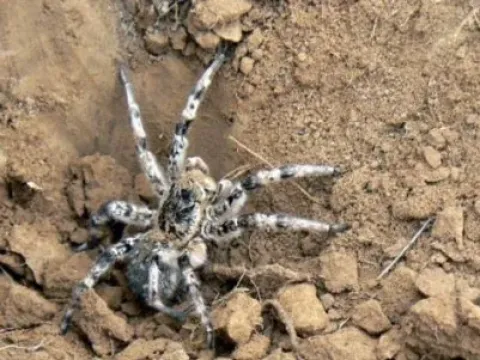
South Russian tarantula
Hogna tarentula
The South Russian tarantula (Hogna tarentula) is a large spider species belonging to the Lycosidae (wolf spider) family.
What the section contains
South Russian tarantula
Females are larger than males, often reaching body lengths of up to 30 mm, with a robust, hairy appearance.
They are characterized by a dark patch on the cephalothorax and a brownish-grey coloration that provides camouflage against dry soil.
Unlike other spiders, they do not build webs for trapping prey; instead, they hunt actively on the ground.
These spiders spend the majority of their time in deep, vertical silk-lined burrows in the soil.
The South Russian tarantula is not a phytophagous insect and does not consume crops, making it a non-pest in the traditional agricultural sense.
Its presence is considered benign, although it may impact local biodiversity by preying on beneficial insects that act as natural pest controllers.
Minor physical damage to seedlings may occur when a spider excavates its burrow near the roots of young plants.
The primary concern for farmers is the potential for painful bites if a worker accidentally disturbs a burrow during field operations.
Generally, these spiders exist in low densities and do not pose a significant threat to large-scale crop production.
Activity typically peaks in the spring once soil temperatures reach levels conducive to insect activity, usually above 12 degrees Celsius.
Throughout the summer months, adults are most active in hunting and mating, while juvenile spiders disperse across fields.
As autumn temperatures decrease, the spiders shift their focus to preparing for hibernation within their deep burrows.
Winter survival is dependent on the depth of the burrow, which protects the spider from freezing temperatures during cold periods.
Early spring marks the emergence of the spiders, often coinciding with the start of intensive agricultural activities in the field.
The most visible sign of habitation is a clear, vertical hole in the ground, often with a small rim made of soil or debris.
The entrance may be lightly reinforced with silk, though there is no prominent web structure visible to the naked eye.
At night, using a light source can reveal the spider's eyes, which reflect light and appear as bright points at the burrow entrance.
Freshly excavated soil near the hole opening is an indicator of active burrow maintenance or expansion by the inhabitant.
The absence of large, complex webs in the nearby vegetation helps distinguish wolf spider habitats from those of web-building species.
No chemical pesticide application is recommended, as this spider is not a threat to crops and contributes to natural ecosystem balance.
Regular cultivation and deep tillage of the soil are highly effective at destroying burrow structures and encouraging the spiders to relocate.
Maintaining clear field edges and removing excessive debris reduces the favorable micro-habitats that these spiders require.
Standard safety measures, such as wearing protective footwear and gloves, are sufficient to prevent accidental bites during agricultural work.
In residential garden settings, simple physical disturbance of the soil is sufficient to discourage them from residing in high-traffic areas.