
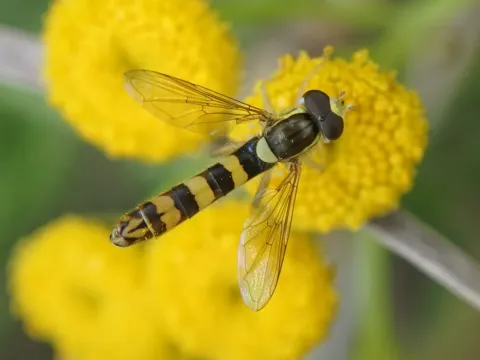
Sphaerophoria flavicauda
Sphaerophoria flavicauda
Sphaerophoria flavicauda belongs to the Syrphidae family, commonly known as hoverflies or flower flies. These flies are easily recognized by their slender, wasp-like body and distinct yellow and black color patterns.
What the section contains
Sphaerophoria flavicauda
Adults are medium-sized flies, characterized by a unique abdominal shape, especially in males, which helps entomologists distinguish them from other similar syrphid species found in agricultural fields.
The larvae, often less noticeable than adults, are legless and possess a soft, elongated body. They are typically found in protected areas on plants where they feed, often camouflaging themselves against the leaf surface.
Adult hoverflies are well-known for their flight patterns, which include hovering in mid-air and making rapid, darting movements between flowers to feed on nectar and pollen.
While many hoverfly larvae are beneficial predators of aphids, some species of the Sphaerophoria genus can exhibit phytophagous behavior, occasionally causing damage to host plants when prey populations are insufficient.
The damage caused by Sphaerophoria flavicauda larvae involves the consumption of plant tissues, primarily in the meristematic regions of young stems, buds, and delicate leaf surfaces.
This feeding activity often leads to growth stunting, where the infected plant shows reduced vigor and deformed leaves, significantly impacting its development and potential yield.
In addition to direct tissue loss, the larvae create entry points for secondary pathogens such as bacteria and fungi, which can cause rotting of the stems or localized necrosis in the floral parts.
Ornamental crops and greenhouse-grown vegetables are particularly susceptible to this type of damage, as the controlled environment allows the pest to complete its life cycle more rapidly.
The overall impact of an infestation includes economic losses due to the reduced quality of produce and the necessity of implementing costly remedial measures to save the affected crop.
The active season for Sphaerophoria flavicauda typically begins in early spring, when warming temperatures trigger the emergence of adults from their overwintering pupal stages.
Hoverflies often have multiple generations throughout a single season, with activity continuing from late spring through to the early autumn months, depending on the climatic conditions.
Adult activity peaks during the flowering periods of both weeds and crops, as these flies rely heavily on floral resources to sustain themselves and prepare for the next generation.
The life cycle is tightly regulated by temperature; warmer years often lead to earlier and more severe infestations, requiring farmers to monitor their fields more closely during these times.
Overwintering occurs as puparia, which remain dormant in the soil or within sheltered parts of plant debris until the following season when conditions become favorable for growth again.
Signs of infestation include the presence of discolored or withered shoot tips, which may curl or stop expanding due to larval feeding within the vascular tissues of the plant.
You may also observe tiny, irregular holes on the leaf surface or along the stems, which are indicative of the larvae's feeding habits as they graze on the plant's epidermis.
Buds and flowers often show premature wilting or morphological defects, such as stunted petals, which result from the larvae damaging the reproductive structures of the plant.
Scouting for the presence of adult flies on the foliage during the day or checking the soil surface for puparia are reliable ways to detect the pest before significant damage occurs.
- Stunted growth of apical shoots.
- Visible feeding tunnels on stems.
- Deformed petals on floral crops.
- Presence of yellowish/greenish larvae.
- Secondary rot infections on damaged tissue.
The primary control strategy involves good agricultural practices, such as removing weeds that act as alternative hosts and maintaining field hygiene to reduce available overwintering sites.
Biological control, including the encouragement of natural predators like parasitic wasps or the use of entomopathogenic nematodes, can provide sustainable population management.
Chemical intervention should be considered a last resort and must involve the use of selective insecticides that do not cause significant harm to the beneficial pollinating insect populations.
Deep plowing at the end of the harvest season is an effective way to expose puparia to environmental stressors, thereby reducing the number of pests that successfully overwinter.
Monitoring using yellow sticky traps is a standard technique in integrated pest management, allowing for early detection and targeted interventions before the population reaches damaging levels.