
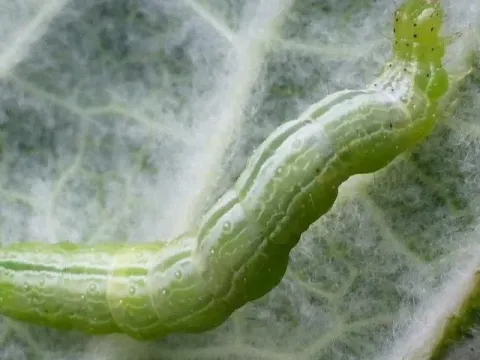
Soybean looper
Pseudoplusia
The Soybean looper (Pseudoplusia includens) is a moth belonging to the family Noctuidae. The adult moth is characterized by its brownish-grey wings with distinct metallic gold or silver markings that form a loop shape, from which the name of the genus is derived.
What the section contains
Soybean looper
The larvae, known as loopers, are light green with thin white lines along their bodies. They are identified by their unique locomotion: they have fewer prolegs than other caterpillars, causing them to move in a looping motion, similar to inchworms.
The life cycle of the soybean looper involves four stages: egg, larva, pupa, and adult. Eggs are typically laid individually on the underside of leaves, and the entire life cycle duration is highly dependent on ambient temperature, ranging from three to four weeks.
Pupation occurs within a white, silken cocoon often found attached to the underside of foliage. Once the pupal stage is complete, the adult moth emerges, typically remaining active during the night to mate and lay eggs.
These moths are known for their migratory behavior. In warmer regions, they can complete multiple generations in a single growing season, making them a persistent challenge for farmers throughout the year.
The soybean looper is a polyphagous pest, meaning it feeds on a wide range of host plants. It is particularly notorious for damaging soybean crops, where larvae consume the leaf tissue, significantly reducing the plant's photosynthetic capacity.
Beyond soybeans, the pest attacks various vegetable and row crops, including tomatoes, beans, cotton, and sunflower. In some areas, high population densities can cause widespread defoliation, leading to stunted plant growth.
Feeding damage typically begins as small holes in the lower canopy leaves, as larvae prefer the shaded environment. As they grow through their larval instars, they consume larger portions of the leaves, eventually skeletonizing them.
High levels of defoliation during the reproductive stages of the crop can lead to significant yield losses. The reduced leaf area limits the energy available for seed pod development, directly impacting the final harvest weight.
In addition to direct feeding, the stress caused by heavy infestations can leave plants more susceptible to secondary diseases and environmental stressors, further compounding the potential losses in the field.
Integrated Pest Management (IPM) for the soybean looper starts with regular field scouting and the use of pheromone traps to monitor adult moth populations and timing the arrival of the next generation.
Cultural practices, such as controlling weeds in and around fields, are essential to remove alternative food sources that can support small initial populations before they migrate to the main crop.
Biological control options include the use of microbial insecticides, such as products containing Bacillus thuringiensis (Bt), which specifically target larval stages while preserving the beneficial insect population.
Chemical control should be implemented based on established economic thresholds. Producers must rotate chemical classes of insecticides to prevent the development of resistance, which is a known challenge with this species.
Post-harvest management, including deep tillage, can help reduce the overwintering pupal population in the soil. This practice disrupts the life cycle and serves as a proactive step to lower the risk for the following season.