
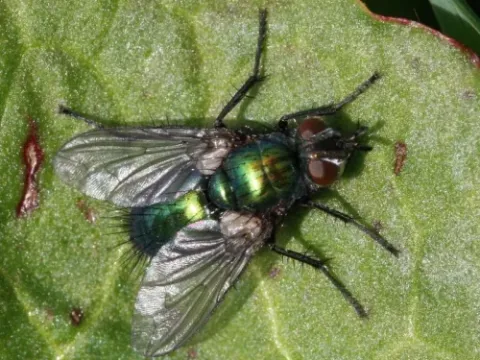
Green gymnocheta
Gymnocheta viridis
The Green gymnocheta (Gymnocheta viridis) is a striking member of the Tachinidae family, known for its brilliant metallic green or blue-green coloration that shimmers in sunlight.
What the section contains
Green gymnocheta
This fly species is characterized by a robust body densely covered with black, stiff bristles, which is a hallmark of many tachinid flies.
Adult flies possess large, well-developed eyes, which provide exceptional vision needed for locating their hosts for reproduction.
They typically measure between 8 to 12 millimeters in length, making them easily distinguishable from smaller dipterans in a garden environment.
While often mistaken for other metallic flies, microscopic examination of the thoracic bristles is usually required for a definitive taxonomic identification.
The green gymnocheta is not typically classified as a primary crop pest; rather, it is a specialized parasitoid that targets other insect larvae.
Its impact on agriculture is largely beneficial, as it helps suppress populations of caterpillars (Lepidoptera) that consume foliage and fruit.
Direct damage is minimal, as adult flies feed strictly on nectar and pollen, contributing incidentally to the pollination of flowering plants.
In some agricultural systems, they may be present in high numbers during nectar flow, which is generally indicative of a healthy and balanced ecosystem.
Therefore, managing this insect is less about eradication and more about preserving its presence to leverage its natural pest-control capabilities.
The activity of the green gymnocheta begins in late spring, coinciding with the first major flowering events in fields and orchards.
Their life cycle is closely tied to the availability of host caterpillars; therefore, their peak population usually follows the emergence of major agricultural pests.
The winter is typically spent in the pupal stage, buried in the soil or protected under thick layers of leaf litter or crop residues.
Depending on the region, there can be multiple generations per year, with the second generation often peaking during mid-summer.
Environmental factors like spring warmth and moisture levels significantly influence the timing of their emergence and overall population success.
Detection is primarily done through observation of active adult flies, which are frequently seen resting on leaves in warm, sunny locations.
A reduction in caterpillar density on vulnerable crops such as leafy greens or vegetables often serves as a sign that parasitoids are active in the area.
While the parasitization process itself is elusive, the subsequent decline in damage to vegetable crops is a reliable indicator of their ecological presence.
The presence of pupae in the topsoil during fall cultivation is the most concrete indicator of successful reproduction in the immediate vicinity.
Gardeners often notice these flies hovering around nectar-rich flowers, where they congregate to feed before seeking out oviposition sites.
Integrated pest management strategies should prioritize the conservation of Gymnocheta viridis rather than their elimination, given their role as beneficial insects.
Avoiding the use of broad-spectrum insecticides, especially during peak flowering times, is essential to protect these natural biological control agents.
Establishing flower strips or field margins with diverse nectar sources encourages the presence and longevity of these tachinid flies.
Minimal tillage practices help preserve the overwintering pupae in the soil, ensuring a stable population for the next growing season.
- Reduce pesticide usage during peak activity periods.
- Plant native wildflowers to support adult fly nutrition.
- Implement conservation tillage to protect pupae.
- Monitor caterpillar populations rather than treating indiscriminately.