
Green leafhopper
Tettigella subvirescens
Description
How to identify
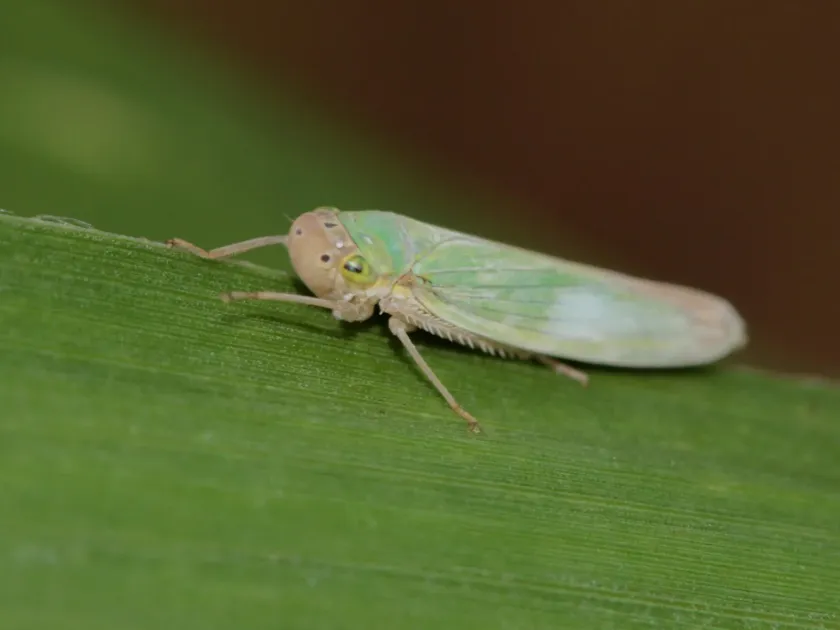
Green leafhopper (Latin: Tettigella subvirescens) is a species of insect belonging to the order Hemiptera and the family Cicadellidae. These small insects typically measure between 7 and 9 millimeters in length.
The adult body is characterized by a vibrant green or yellowish-green color, providing excellent camouflage against foliage. They have a broad head with large compound eyes that allow for acute vision.
Nymphs resemble smaller versions of the adults but lack fully developed wings. They are highly active and capable of jumping considerable distances when disturbed, making them difficult to catch.
The mouthparts are of the piercing-sucking type, specifically adapted to penetrate plant epidermis and extract vital fluids from the phloem and xylem tissues.
These insects are primarily diurnal, preferring warm and sunny conditions where they move quickly across leaf surfaces, often moving between plants to feed and mate.
What it damages
This pest is a polyphagous insect, meaning it feeds on a wide range of agricultural crops. Commonly affected plants include potatoes, sugar beets, legumes, and various cereal grains.
Beyond cultivated crops, green leafhoppers often inhabit weeds and wild grasses, which serve as primary breeding grounds before the insects migrate to commercial fields.
Feeding occurs when both nymphs and adults concentrate on the undersides of leaves, extracting sap, which deprives the plant of necessary nutrients and disrupts its normal development.
Direct mechanical damage leads to localized tissue death, stunted growth, and a reduction in photosynthetic efficiency, which significantly lowers overall crop yield and plant vigor.
In addition to sap extraction, these insects are known vectors for various phytoplasmas and viruses that cause systemic diseases, often resulting in severe economic losses for farmers.
When it appears
The life cycle of the green leafhopper is highly dependent on regional climate conditions. In most temperate areas, the insect completes one or two generations per growing season.
The species overwinters primarily in the egg stage, with eggs deposited by females into the stems or petioles of perennial plants or weeds, where they remain protected until spring.
As temperatures rise in the spring (typically in May), nymphs emerge and begin feeding on young foliage, progressing through several instars before reaching adulthood.
Peak population levels usually occur in mid-summer, when massive numbers of adults emerge and migrate from weed reservoirs to vulnerable agricultural crops.
As summer draws to a close, adults begin the process of mating and egg-laying for the next overwintering generation, after which the active population gradually declines.
Signs of infestation
The initial signs of infestation are small, light-colored chlorotic spots on leaves caused by feeding punctures, which can later coalesce into larger yellow or necrotic areas.
As the infestation progresses, leaves may begin to curl, turn yellow, and wither prematurely, which is particularly evident during dry spells when the plant's water balance is strained.
Stunted development is a common secondary sign; affected plants often show poor root growth, reduced height, and lower fruit or tuber production compared to healthy specimens.
Evidence of their presence includes the sudden movement of insects when foliage is disturbed and the accumulation of shed white skins (exuviae) left by nymphs on the undersides of leaves.
In severe cases, the production of honeydew by the leafhoppers can lead to the growth of sooty mold, which creates a dark, sticky film on the leaf surface, further inhibiting photosynthesis.
Control measures
Cultural control methods involve strict weed management, as clearing wild hosts from field margins and surrounding areas is critical to reducing the initial pest population.
Chemical intervention is necessary if pest numbers exceed economic thresholds. Systemic insecticides from the organophosphate, neonicotinoid, or pyrethroid families are frequently utilized.
Applications should be timed during the early morning or late evening when insects are less active, ensuring thorough coverage of the foliage, especially the lower leaf surface.
Biological control, involving the protection and encouragement of natural predators like ladybugs, lacewings, and parasitic wasps, can provide significant suppression of leafhopper populations.
Integrated pest management strategies also recommend the use of yellow sticky traps for monitoring, which helps identify the timing of migrations and allows for precise, targeted insecticide application.
Discussion
No discussions yet — be the first.