
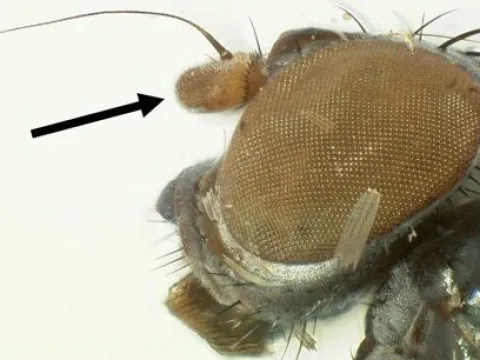
Blue corn fly
Euxesta coerulea
The blue corn fly (Euxesta coerulea) is a species belonging to the family Ulidiidae, known commonly as picture-winged flies due to the patterns on their wings.
What the section contains
Blue corn fly
The adult fly is easily recognized by its metallic, blue-green iridescent body and clear wings marked with distinctive dark transverse bands.
Larvae are typical dipteran maggots, generally creamy white to yellowish, lacking legs and specifically adapted to burrow into corn ears to feed.
The life cycle undergoes complete metamorphosis, including egg, larva, pupa, and adult stages, with pupation often occurring in the soil or crop residue.
As an agricultural pest, this species thrives in warm climates where multiple generations can be completed within a single growing season.
The primary host for the blue corn fly is maize (corn), where the larvae attack the ears during the silk stage and subsequent grain development.
Adults deposit eggs near the silks; once hatched, the larvae move into the ear and feed directly on the developing kernels and the cob tissue.
The damage caused by larvae is often exacerbated by secondary infections of fungi and bacteria, which can lead to ear rot and significant quality loss.
While corn is the main target, the pest can also impact other crops, utilizing them as secondary hosts during periods of peak population density.
Economic losses arise not only from reduced grain yield but also from contamination by fungal mycotoxins, which can make the grain unsuitable for processing.
An early sign of infestation is the premature browning or drying of the corn silks, indicating that larvae have entered the ear to feed.
Internal examination of the ears will reveal feeding tunnels in the kernels, often accompanied by the presence of larvae and associated decay.
The presence of necrotic, decaying spots on the ear surface covered with mold is a strong indicator of advanced larval feeding damage.
Adult flies are frequently observed congregating on the tassels or leaves of the corn plants, especially during the early morning hours.
Exit holes in the husks of the ears are often visible after the larvae have completed their development and have dropped to the ground to pupate.
Cultural control strategies include deep fall tillage, which exposes pupae in the soil to harsh winter conditions and natural predators, reducing population survival.
Selecting corn hybrids with tight, long husks that completely cover the ear provides a physical barrier, making it difficult for flies to reach the silks for egg-laying.
Chemical intervention involves applying insecticides targeted at the adult population during the peak emergence period to prevent egg-laying on the ears.
Crop rotation and area-wide management practices help interrupt the pest's cycle and prevent the buildup of high populations in specific corn-growing regions.
Monitoring using yellow sticky traps or bait traps is essential for timing insecticide applications effectively and ensuring the sustainable use of crop protection products.