
Blue meat fly
Phormia terraenovae
Description
How to identify
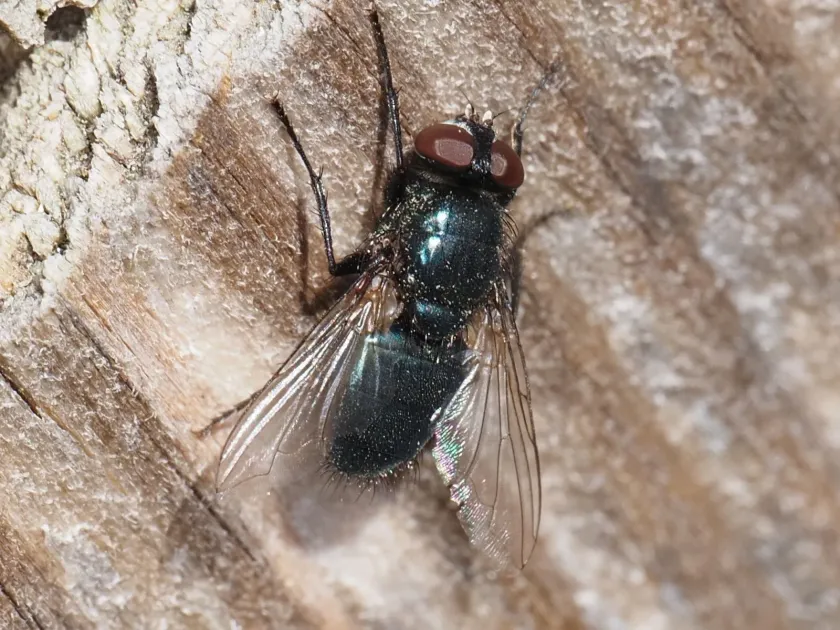
The blue meat fly (Phormia terraenovae) is a member of the Calliphoridae family. The adult fly has a metallic blue or blue-green appearance and typically measures between 8 and 12 millimeters in length.
It features a dense covering of hairs on the thorax and specific wing venation patterns. Males and females can be differentiated by the width of the space between their eyes, which is usually broader in females.
The larvae progress through three developmental stages, growing into creamy-white maggots. They are legless and possess sharp mouth hooks, which are essential for feeding on their organic host medium.
The pupal stage occurs inside a puparium, a hardened, barrel-shaped casing that is dark brown or black in color. This stage provides the necessary protection for the insect to survive harsh conditions.
The complete life cycle duration is highly dependent on ambient temperature. In optimal conditions, the fly can complete its development from egg to adult in under two weeks, facilitating rapid population growth.
What it damages
The primary damage caused by Phormia terraenovae involves the contamination and destruction of products of animal origin, such as meat, fish, and offal, which are essential agricultural commodities.
In food processing facilities and warehouses, the presence of these flies leads to significant economic losses. Larvae consumption of products renders them completely unfit for consumption and trade.
Beyond physical destruction, these flies act as vectors for various pathogens. By moving between waste and food, they spread bacteria, viruses, and helminth eggs, posing a serious threat to public health.
In livestock farming, they can cause myiasis, where larvae infect open wounds on animals. This results in secondary infections, animal distress, reduced growth rates, and lower overall productivity for the farm.
The spoilage caused by larvae is often accompanied by rapid decomposition and foul odors, which can compromise the sanitary status of the entire storage area or processing facility.
When it appears
The blue meat fly becomes active in early spring as soon as temperatures rise consistently above 5-7 degrees Celsius. Adult flies start their search for food and oviposition sites almost immediately.
The population peaks during the summer months when warm weather allows for the fastest development rates. High temperatures accelerate the life cycle, leading to multiple generations appearing in a single season.
Activity tapers off in the autumn, though the flies remain active until the onset of hard frosts. In temperature-controlled warehouses or livestock shelters, the flies can continue to breed year-round.
Winter is typically spent in the pupal stage, buried in the soil or tucked into sheltered cracks within buildings. They emerge as adults with the return of favorable spring conditions.
Population density is heavily influenced by the availability of larval food sources. Areas with poor waste management often experience much higher fly populations due to continuous breeding opportunities.
Signs of infestation
The presence of adult flies with a characteristic metallic blue sheen buzzing around protein-based food sources is the most common indicator of an infestation.
The detection of small, white egg masses on the surface of meat products confirms that the flies have begun the reproductive process. Larvae quickly burrow into the tissue upon hatching.
Evidence of larval activity includes the softening and liquefaction of meat, a distinct foul smell of decay, and visible maggot tunneling through the affected products.
- Sightings of adult metallic blue flies.
- Egg masses found on meat or fish products.
- Presence of maggots within the organic product.
- Strong, unpleasant odor of decomposition.
Finding dark, barrel-shaped puparia in corners, crevices, or near waste bins is a strong indication of a well-established breeding site in the vicinity.
Control measures
Strict sanitation is the most critical component of pest control. All organic waste must be removed and disposed of daily to eliminate breeding grounds for the larvae.
Installing high-quality insect screens on doors and windows is essential to prevent adult flies from entering warehouses and processing areas. Effective waste management practices are crucial.
Chemical control using approved insecticides and attractant baits is recommended for reducing adult fly populations. Regular disinfection of facilities helps maintain sanitary standards and kills dormant pupae.
In veterinary practice, keeping animal wounds clean and treated with appropriate antiseptics is the best defense against myiasis caused by this species of fly.
Ongoing monitoring of the facility, including the use of fly traps, allows for early intervention before the population can explode, thereby protecting the quality of agricultural products.
Discussion
No discussions yet — be the first.