
Pepper maggot
Zonosemata electa
Description
How to identify
The pepper maggot (Zonosemata electa) is a member of the fruit fly family (Tephritidae) within the order Diptera. It is a highly specialized pest that targets various plants in the Solanaceae family.
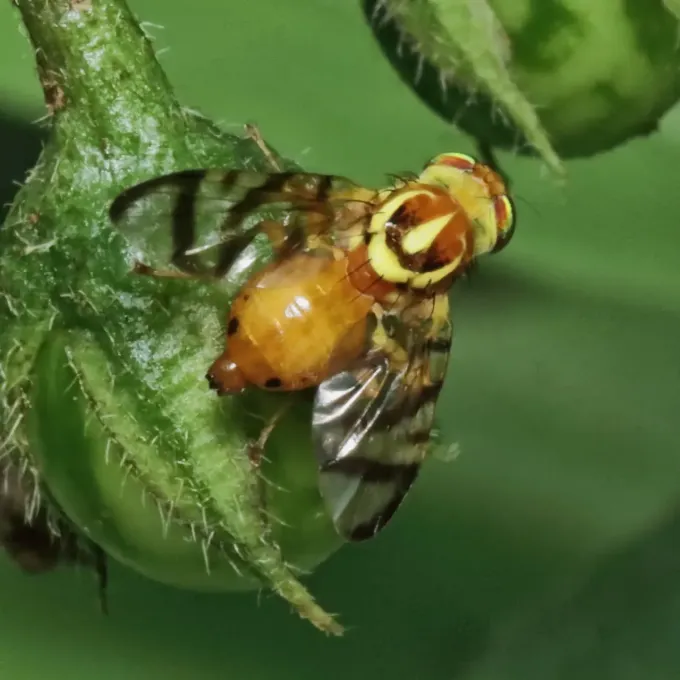
Adult flies are approximately 5-7 mm in length, possessing a brownish-yellow body and distinctive dark, band-like markings on their wings, which are characteristic of this group.
The life cycle of the insect consists of four stages: egg, larva, pupa, and adult. The female is equipped with a sharp ovipositor used to pierce the skin of young, developing fruits to deposit eggs directly into the flesh.
The larvae are small, legless, cylindrical creatures with a white or yellowish appearance. Once inside the fruit, they feed on the internal tissues, effectively destroying the interior of the pepper.
This species is specifically known for its preference for pepper crops, although it can occasionally infest other nightshades, making it a serious concern for vegetable growers.
What it damages
The primary hosts for the pepper maggot are bell peppers and hot peppers. Occasionally, tomatoes grown in close proximity to infested pepper fields can also serve as hosts.
The damage is caused entirely by the larval stage. As the larvae feed on the interior flesh and the area around the seeds, they create tunnels that lead to rapid internal decay.
An infested fruit typically turns into a soft, rotting mass from the inside out, making it completely inedible and unsuitable for sale at any market.
Secondary infections, such as bacteria and fungi, often enter through the small oviposition scars left by the female, accelerating the destruction of the pepper fruit.
In cases of severe infestation, a significant portion of the harvest can be rendered worthless, causing economic damage to professional growers and home gardeners alike.
When it appears
The activity of the pepper maggot peaks during the mid-to-late summer, coinciding with the development and maturation of pepper fruits in the garden.
Adults emerge from the soil after overwintering as pupae, and their reproductive success is highly dependent on the availability of suitable fruits for egg-laying.
The duration of the life cycle varies depending on temperatures; in hot summers, the development from egg to adult is faster, allowing for a more intense pest pressure.
Growers should be especially vigilant from mid-summer until harvest time, as this is when the flies are actively seeking fruit to sustain their next generation.
After the harvest, the pupae move into the soil or remain within crop residues to undergo diapause, surviving the winter to start the cycle again the following season.
Signs of infestation
The most visible sign of an infestation is a small, subtle puncture mark on the surface of the pepper skin, which is the entry point used by the female fly.
Often, a dark, depressed spot develops around the puncture site as the tissue begins to break down, which is a clear indication of larval feeding inside.
Affected fruits may show premature color changes, becoming blotchy or pale, and in some cases, the fruit may drop from the plant before reaching full maturity.
If you suspect an infestation, cutting open a fruit will often reveal tunnels, the presence of larvae, and a decomposed interior mass of tissues and frass.
- Puncture scars on the outer skin of the pepper.
- Soft, dark spots on the fruit wall.
- Premature yellowing or rotting of the fruit on the vine.
- Presence of larvae feeding within the seed cavity.
Control measures
Effective management of the pepper maggot relies on integrated pest management (IPM) practices, combining cultural controls with targeted chemical interventions when necessary.
Crop rotation is crucial; avoiding the planting of peppers in the same area for multiple years can help disrupt the pest's survival cycle in the soil.
Promptly removing and destroying any infested fruits found in the field is vital to prevent the larvae from leaving the fruit to pupate in the soil.
Deep cultivation of the soil in late autumn can expose pupae to winter temperatures and predators, significantly reducing the survival rate for the next season.
If chemical control is required, use insecticides registered for fruit flies, ensuring that application timing coincides with the adult emergence phase and adheres to strict pre-harvest intervals.
Taxonomy
- Latin name
- Zonosemata electa
- Order
- Diptera (flies)
- Family
- Tephritidae
- EPPO code
- ZONOEL
Discussion
No discussions yet — be the first.