
Zonosemata
Zonosemata
Description
How to identify
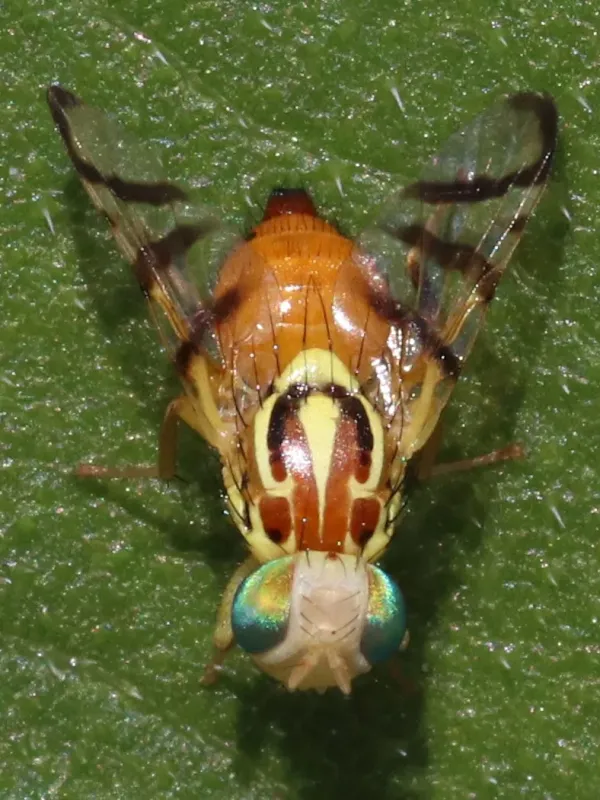
Zonosemata is a genus of insects from the fruit fly family (Tephritidae), which includes several species, the most prominent being Zonosemata electa. These are small flies with wings adorned with a distinctive reticulated or banded pattern, which serves as camouflage on plant leaves.
Adult individuals possess well-developed vision and bright coloration typical of many members of this family. The fly's body is compact, usually 5-8 mm in length, making them difficult to notice during low infestation levels in the field.
The larvae of the pest have a typical dipteran form: a legless white or creamy maggot with mouth hooks. They go through several developmental stages inside the fruit tissues, gradually increasing in size as they consume the pulp.
The life cycle of the insect is closely linked to the phenology of the host plant. Puparia that overwinter in the soil give rise to a new generation of flies that emerge during the flowering or fruiting period of the crops.
An important identification feature is the specific wing pattern, which distinguishes Zonosemata from other species of flies found on vegetable crops during the same period.
What it damages
The primary hosts for this pest are plants from the Solanaceae family, particularly peppers (both sweet and hot) and sometimes tomatoes. This makes the pest a threat to commercial vegetable plantations.
Female flies use their ovipositors to pierce the fruit skin and lay eggs directly into the pulp. This process causes micro-trauma, which opens the way for secondary infections.
Upon hatching, larvae begin feeding intensively on the interior of the fruit, creating winding galleries. As a result, the fruit loses its marketability and quickly rots due to the disruption of tissue integrity.
The harmfulness of Zonosemata lies in the fact that even a single puncture makes the fruit unsuitable for sale or processing. During mass outbreaks, crop losses can amount to dozens of percent.
In addition to direct damage, larvae facilitate the development of fungal and bacterial rots, which spread rapidly inside the fruit, making it completely inedible within a few days.
Control measures
The main control measure is the thorough disposal of all infested fruits. Fallen fruit should not be left on the field, as larvae can complete their developmental cycle in the soil and prepare for overwintering.
The application of agronomic methods, such as deep fall tillage, allows for the destruction of a significant portion of the puparia overwintering in the topsoil layers.
Using protective nets over garden beds during the active flight period of the flies effectively prevents females from laying eggs on the fruits, which is an environmentally safe protection method.
The use of pheromone traps and yellow sticky cards helps to monitor population numbers and make timely decisions regarding the application of insecticides if the economic threshold is exceeded.
Chemical control should be aimed at eliminating adults before egg-laying occurs. Systemic and contact-action insecticides approved for use on vegetable crops during the fruiting period are effective, provided that pre-harvest intervals are respected.
Taxonomy
- Latin name
- Zonosemata
- Order
- Diptera (flies)
- Family
- Tephritidae
- EPPO code
- ZONOSP
Discussion
No discussions yet — be the first.